When a slot car starts to vibrate, loses traction, or sounds different on the straights, the first thing to check is not always the motor or the tyres: many times the problem lies in the bearings. An axle that rotates with play or too much friction ruins any setup, no matter how well balanced the rest of the running gear is. Choosing the correct bearing —type, material, diameter, and position— is one of those details that separates a car that "runs well" from one that truly flies.
Bearings are small components, but their influence on dynamic behaviour is enormous. They directly affect rolling resistance, motor lifespan, cornering stability, and response on acceleration. In the realm of slot preparation, working with the right bearings is not a luxury: it is part of the assembly process from the very beginning.
In this category, you will find bearings made from different materials, geometries, and sizes, designed for the most common setups in cars from brands like NSR, Slot.it, Scaleauto, or Avant Slot. Whether you are building a competition car from scratch or simply want to replace a worn bearing, here are the references you need, with enough information to avoid mistakes.
What are bearings and why are they important in slot racing
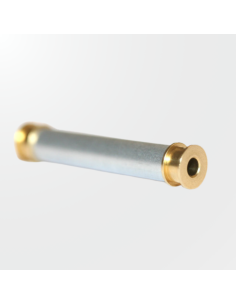
A bearing is the element that holds the axle in its position within the chassis and allows it to rotate with minimal friction. In slot cars, the front and rear axles pass through them, and their function is twofold: to guide the rotation and to absorb lateral and axial loads generated during driving.
A damaged bearing —or one that is poorly chosen— causes the axle not to be perfectly aligned, resulting in vibrations, premature wear of the pinion and crown gear, and a noticeable loss of efficiency. In a race, this translates to slower laps and increased motor heating, which has to work harder to move a running gear that does not rotate freely.
The axle support, chassis, and motor configuration (sidewinder, inline, or anglewinder) determine which type of bearing fits best. There is no "universal" bearing that is valid for everything: the type and material must be adjusted to the intended use.
How to choose the correct bearing
The correct choice involves being clear about several factors before purchasing:
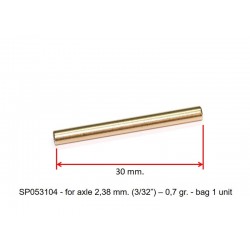
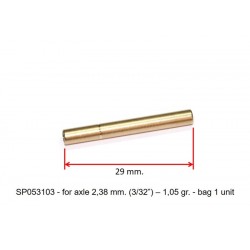
- Axle diameter: the bearing must fit exactly the diameter of the axle it will house. The most common in 1/32 slot are 3/32" (2.38 mm) and 3 mm, although other sizes exist depending on the brand and chassis.
- Type of chassis and support: each chassis has its own tolerances. A bearing that is too loose in the support will generate the same problem as a worn internal one.
- Intended use: preparing a car for high-level competition —where every tenth of resistance counts— is not the same as assembling a car for mixed use or collection.
- Material: bronze, nylon, and engineering plastic have different behaviours. Self-lubricating bronze is the reference standard in preparation; nylon offers less friction when dry but less robustness against heat.
- Offset: offset bearings allow for adjusting the axle height and therefore the grip and geometry of the car. They are a common tool in setup.
If you have doubts about the exact measurement of your chassis, the most reliable method is to measure the axle with a micrometer or caliper before ordering. A few hundredths of a difference can render the bearing useless or cause more harm than good.
Types of bearings: main differences
In the slot market, there are several well-defined categories:
Sintered bronze bearings (self-lubricating)
These are the most widespread type in serious preparation. Sintered bronze is a porous material that retains lubricant inside and releases it progressively during axle rotation. They offer an excellent friction/durability ratio and withstand the heat generated during long sessions well. They are the usual choice in competition setups with high-power motors.
Nylon and engineering plastic bearings
Lighter than bronze and with very low initial friction in the absence of lubricant. They are a good option for moderately used cars or for those who prefer not to have to lubricate periodically. Their weak point is lower thermal resistance: with very demanding motors, they can deform.
Offset bearings
Their interior is eccentric to the exterior: by rotating them within the support, the axle rises or lowers slightly. This allows for adjusting the ride height, modifying the pressure on the tyres, and fine-tuning traction without touching the chassis. They are a highly valued tuning tool in competition.
Ball joints
They allow for a certain degree of articulation, compensating for small misalignments of the axle. They are used in flexible chassis or in setups where the axle is not perfectly aligned by design. They are less common but very useful in specific applications.
Technical aspects we should know
Beyond the type of material, there are some technical concepts that are important to understand to avoid assembly errors:
- Axial and radial play: axial play is the side-to-side movement of the axle; radial play is the up-down movement or any direction perpendicular to the axle. Both should be minimal but not zero: a completely tightened bearing generates friction, while one with too much play produces looseness and vibrations.
- Support tolerance: if the bearing housing in the chassis has play, the bearing will move inside and lose all its function. In some chassis, it is necessary to seal the bearing with a drop of specific adhesive or adjust it with sandpaper.
- Lubrication: self-lubricating bronze bearings appreciate a small amount of precision oil when mounted and periodically according to use. No grease: too much viscosity increases friction instead of reducing it.
- Interference with the wheel: when mounting the bearing, ensure that it does not rub against the rim or the hub. Continuous lateral rubbing wears both the bearing and the rim itself.
Practical usage and maintenance tips
Bearings are wear parts. They do not last indefinitely, and checking them is part of the regular maintenance of any prepared car:
- Periodically check the axle play. With the car disassembled, hold the axle with two fingers and try to move it laterally. Any perceptible play indicates that the bearing is worn or poorly adjusted.
- Clean before lubricating. If the bearing accumulates rubber dust, track dirt, or remnants of old lubricant, clean it with a mild solvent before applying new oil. A dirty bearing lubricated on top remains a dirty bearing.
- Do not use the same bearing indefinitely. In competition, many preparers replace them after a certain number of sessions as a preventive practice. It is a cheap part compared to what a damaged motor or chassis due to vibration can cost.
- Store bearings properly. If you store them loose, they can oxidise or accumulate abrasive particles. A small airtight container with a few drops of fine oil is enough to keep them in good condition.
Common mistakes to avoid
There are mistakes that are repeated over and over, especially among those starting to prepare cars:
- Mounting the bearing without checking the actual axle diameter. Different manufacturers use slightly different measurements. What works in an NSR may not fit the same in a Scaleauto.
- Using excessive lubricant. More oil does not mean less friction. A drop is sufficient; excess ends up attracting dust and creating an abrasive paste.
- Ignoring the state of the support. Changing the bearing without checking if the housing is damaged or deformed does not solve the problem.
- Confusing the type of bearing according to the motor configuration. In an anglewinder setup, the loads on the rear axle are different from those of a sidewinder or an inline. The most suitable type of bearing may vary.
- Over-tightening when securing the bearing. If adhesive is used for sealing, it should be applied sparingly. If it gets inside the bearing, it increases friction and renders it useless.
Recommendations for beginners and advanced users
If you are starting
The simplest approach is to start with self-lubricating bronze bearings of the diameter corresponding to your chassis. They are robust, easy to find, and forgive small lubrication errors. If you are working with NSR, Slot.it, or Scaleauto cars, look for the bearings recommended by the manufacturer for that reference: it will save you doubts about tolerances.
Do not complicate yourself with offset bearings until you are clear on how they affect axle height and car geometry. First, mount correctly, then fine-tune.
If you already have experience
Offset bearings are a tuning tool worth exploring. Small adjustments in rear axle height can significantly change behaviour in slow corners or on the exit of chicanes. Combine them with good balancing of the running gear and precise lubrication to get the most out of them.
In high-level competition, some preparers test different materials depending on the type of track and ambient temperature. Bronze behaves differently on a cold circuit than on one that has had cars on it for hours. That level of detail is what makes the difference in tight lap times.
| Type of bearing |
Material |
Friction |
Heat resistance |
Maintenance |
Recommended use |
| Self-lubricating |
Sintered bronze |
Low with oil |
High |
Periodic |
Competition, intensive use |
| Nylon / plastic |
Nylon / POM |
Very low when dry |
Medium-low |
Minimum |
Moderate use, mixed cars |
| Offset |
Bronze or nylon |
Depending on material |
Depending on material |
Depending on material |
Tuning, competition |
| Ball joint |
Variable |
Low |
Medium |
Periodic |
Flexible chassis, misalignments |
Frequently asked questions about bearings
What is the difference between a bearing and a roller bearing?
A bearing is a smooth support on which the axle slides directly over the material. A roller bearing incorporates balls or rollers between the axle and the housing, further reducing friction. In 1/32 slot, smooth bearings are the most common due to size and cost, although in some competition applications, roller bearings are used.
How often should bearings be changed?
It depends on usage. In competition with long sessions, check them every few races and change them at any sign of play. In home or sporadic use, they can last much longer. The most reliable indicator is the radial play of the axle.
Can I use grease instead of oil?
It is not recommended. Grease has higher viscosity and increases friction in small parts. For slot bearings, the appropriate choice is low-viscosity precision oil, applied in small amounts.
Are offset bearings used on the front axle as well?
They are mainly used on the rear axle to adjust ride height. Their use on the front axle is less common, although in some chassis it may make sense to level the car.
What happens if I mount a bearing with the incorrect diameter?
If it is too small, the axle will not fit or will rub excessively. If it is too large, there will be play, and the axle will wobble, generating vibration and wear. Always verify the measurement before mounting.
Can bronze bearings be reused after cleaning them?
Yes, if they are not worn or deformed. A cleaning with a mild solvent and a new lubrication can restore almost all their functionality if the internal condition is good.
What bearings does a standard NSR use?
NSR typically uses high-quality self-lubricating bronze bearings in their cars. Many preparers keep them as standard or replace them with those from NSR itself during maintenance.
Does the type of bearing influence the inline, sidewinder, or anglewinder configuration?
Yes. Each configuration generates different loads on the rear axle. In an anglewinder setup, for example, the lateral forces are different from those of a sidewinder. The material and robustness of the bearing must adapt to those conditions.
Can I use bronze bearings in a flexible plastic chassis?
Generally yes, but it is important to check that the housing is precise enough. In very flexible chassis, a ball joint may be more suitable as it compensates for the dynamic deformations of the chassis during driving.
How do I know if the bearing is the cause of the problem and not the axle or the support?
Remove the bearing and pass the axle directly through the housing. If the play disappears, the problem is the bearing. If it persists, it may be the support or the axle itself. A step-by-step diagnosis is always more reliable than changing parts blindly.