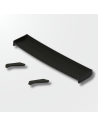
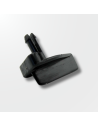
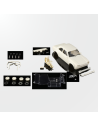
If you have ever seen a slot car shoot out of a corner for no apparent reason, it is likely that the guide had something to say. This small component —often underestimated by those new to the hobby— is actually the point of contact between the car and the track, responsible for maintaining the trajectory in corners and the channel through which the current flows to power the motor. Changing or fine-tuning the guide is one of the first modifications that makes a tangible difference, both in competition and in home use.
At Ministry of Hobby, you will find guides for all systems and user profiles: from those looking for a direct replacement to keep their car on track, to the tuner seeking the perfect millimetre of clearance to shave tenths off in a race. Below, we explain everything you need to know to make the right choice.
What is the guide and why is it the most critical component of the car
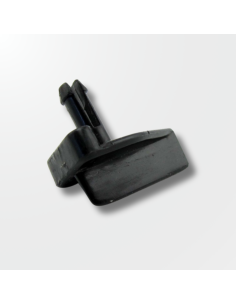
The guide is the piece that fits into the central rail of the track. It serves two simultaneous and inseparable functions: steering and electrical conduction. On one hand, it is literally the steering axis of the car: without it, the vehicle cannot follow the layout. On the other, it houses the braid —the conductive strips— that collect the current from the rail and transmit it to the motor.
Having both functions rely on the same component makes its condition and geometry decisive. A worn, poorly adjusted, or incorrectly sized guide for the track system used can lead to everything from power loss to constant derailments, as well as erratic behaviour in chicanes and tight corners.
Unlike other spare parts, the guide interacts directly with the track at every centimetre of travel, which implies progressive wear that should be monitored. In competition, many drivers change the guide before each major race; in regular use, checking it every few sessions is a habit that extends the life of the car and improves lap time consistency.
How to correctly choose the guide for your car
The first filter is always compatibility with the track system. Not all guides are interchangeable: the universal rail (Scalextric, Ninco) and the sport rail (Scaleauto, Slot.it) have different geometries, and a guide designed for one may fit poorly or not work at all on the other. Before purchasing, identify which system you will be racing on regularly.
The second criterion is the chassis accommodation. Each manufacturer —NSR, Slot.it, Avant Slot, Scaleauto— designs their chassis with a specific guide mouth, and although many have tended towards some standardisation, there are differences in depth, width, and fixing system (with screws, pressure, or pins). Consult the technical sheet of the car or the manufacturer's catalogue before choosing.
The third factor, especially relevant in competition, is the tongue height. A deeper guide improves grip on the rail and reduces derailments, but may increase resistance on tracks with pronounced joints. A shallower guide offers less grip but greater fluidity on uneven surfaces. There is no universal answer here: it depends on the track, the car, and the driving style.
Finally, consider the material. Standard plastic guides are sufficient for home use and training; those made from more rigid technical materials (acetals, high-density nylons) offer greater dimensional stability and less deformation with the heat generated during long sessions.
Types of guides and their main differences
Standard or stock guide
This is the one that comes factory-fitted in most 1/32 scale cars. It performs its function in general use contexts but is often the first spare part changed when seeking to improve performance. Its main limitation is manufacturing tolerance: in series production, variability between units can be significant.
Competition guide
Manufactured with greater dimensional precision and more durable materials. Brands like NSR, Slot.it, or Scaleauto offer guides specifically designed for their competition chassis, with profiles optimised for different types of rail and fine depth adjustments. In this category, you will also find guides with different tongue widths to adapt grip according to the type of rail.
Pivoting or angled guide
Some guides incorporate a pivot system that allows for some lateral or vertical movement. This improves the absorption of track irregularities and favours constant electrical contact, especially on circuits with joints or changes in elevation. They are common in advanced competition setups.
Guide with integrated braids
Certain manufacturers sell the guide already assembled with the braids included, simplifying replacement and ensuring an optimised combination of electrical contact. Useful for quick checks in the pits during a race.
Technical aspects we need to know
The guide operates in an environment of constant friction. The rail exerts lateral pressure on its walls, and the bottom part (the tongue) progressively wears down due to contact with the bottom of the rail. This wear is not always visible to the naked eye: a guide may appear intact yet have lost tenths of a millimetre on the tongue, enough to increase lateral play and result in a more twitchy behaviour.
The mounting clearance in the chassis is another critical parameter. Too much clearance and the guide moves laterally, causing instability; too tight and it gets stuck, preventing the car from following the curvature of the rail naturally. The optimal point is a guide that pivots freely in its accommodation without excessive play.
Regarding electrical conduction, the guide is merely the housing: the quality of contact largely depends on the condition and tension of the braids. A perfect guide with worn or poorly tensioned braids will still cause electrical supply issues. Therefore, it is advisable to check both components together.
Some tuners apply a thin layer of dry lubricant (PTFE powder) on the walls of the guide to reduce friction with the rail without compromising electrical contact. This is a common practice in competition, although it requires judgement: an excess of lubricant in the braid area can cause current interruptions.
Practical tips for use, maintenance, and preparation
- Check the guide before each competition session. A quick look at the tongue and the clearance in the chassis can save you from a retirement.
- Always carry spare guides in the pits. It is one of the most easily damaged consumables in a crash or when removing the car from a rail abruptly.
- Ensure that the braids make good contact with the rail when the guide is mounted. If the car is slow or intermittent, try gently pressing the guide against the bottom of the rail with the car stopped: if the problem disappears, the cause is the electrical contact.
- Do not force the pivot. If the guide turns with difficulty in its housing, clean the housing with a dry cotton bud before lubricating. Dust and debris accumulated from the track are the most common cause of blockage.
- Adjust the depth according to the track. On new tracks or those with pronounced joints, a guide with less tongue depth can improve fluidity. Experiment before settling on a configuration.
Common mistakes we should avoid
Mixing guides from different systems without checking
A guide designed for sport rail (Scaleauto, Slot.it) may physically fit into a chassis designed for universal rail (Scalextric, Ninco) and still have an incompatible tongue geometry. The result is a car that seems to work but derails with inexplicable frequency. Always verify system compatibility before installation.
Ignoring progressive wear
The guide does not "break" suddenly: it wears down gradually. Many enthusiasts attribute a deterioration in performance to other factors (tyres, motor, track) that actually originates from a guide that has lost precision. Compare it periodically with a new guide of the same model to detect differences.
Over-tensioning the braids
When fitting new braids, the temptation is to bend them forcefully to ensure contact. Excessive tension prevents the guide from pivoting freely and causes the car to "pull" the rail instead of following it. The braids should have enough pressure to maintain contact, but without stiffening the assembly.
Forgetting to clean the rail
Accumulated dirt on the rail (dust, rubber debris from tyres, lubricant residues) transfers to the guide and braids, increasing electrical resistance. Regularly cleaning the rail is as important as keeping the guide in good condition.
Changing the guide without checking the accommodation
A deteriorated or deformed accommodation in the chassis will cause any new guide to behave irregularly. Before concluding that the guide is the problem, inspect the condition of the chassis in the mounting area.
Recommendations for beginners and advanced users
If you are starting out
The most important thing is to understand that the stock guide of your car is a reasonable starting point, but that early wear (especially on plastic tracks with pronounced joints) can quickly degrade the experience. Get a couple of spare guides of the same model from the beginning, learn to fit and remove them without forcing, and observe how the car's behaviour changes when the guide is new compared to when it has several sessions on it.
If you notice that your car is derailing more than expected, before looking for complex causes, check the condition of the guide and the contact of the braids. In 70% of cases, the problem lies there.
If you already have experience
In competition, the guide is one of the most accessible tuning parameters with the greatest impact on behaviour. Experiment with different tongue depths according to the type of track (plastic, wood, urethane), play with the clearance in the accommodation to find the balance between stability and pivot freedom, and consider using guides with different tongue widths depending on whether you prioritise lateral grip or fluidity in chicanes.
Brands like NSR, Slot.it, and Scaleauto offer extensive catalogues with guides differentiated by geometry and material. Knowing them allows you to fine-tune the car with a level of detail that goes far beyond simple replacement.
| Type of guide |
Track system |
User profile |
Main advantage |
| Standard stock |
Universal / Sport |
Beginner, home use |
Direct compatibility, low cost |
| Competition (NSR, Slot.it, Scaleauto) |
Universal or Sport (depending on model) |
Intermediate / advanced |
Greater dimensional precision and durability |
| Pivoting / angled |
Universal / Sport |
Advanced, competition |
Better absorption of track irregularities |
| With integrated braids |
According to manufacturer |
All levels |
Quick replacement, optimised electrical contact |
Frequently asked questions about slot guides
Can I use any guide on my car?
No. You need to verify two things: that the guide is compatible with the track system you use (universal rail or sport rail) and that it fits correctly in the chassis accommodation of your car. Consult the manufacturer's catalogue or contact us if you have any doubts.
How often should I change the guide?
With moderate home use, checking the condition of the guide every 10-15 sessions is sufficient. In competition, many drivers change it before each race or when they detect any variation in the car's behaviour.
Does the guide affect the speed of the car?
Indirectly, yes. A worn guide or one with poor electrical contact can cause power losses due to inadequate current transmission. Additionally, a guide that does not pivot freely adds mechanical resistance to the movement of the car.
What is the difference between a guide for universal rail and one for sport rail?
The universal rail (Scalextric, Ninco) has a wider slot than the sport rail (Scaleauto, Slot.it). This implies differences in the width and depth of the guide's tongue. Mixing guides between systems can lead to excessive play or inability to fit.
Can I lubricate the guide?
In moderation and in the right place. A dry lubricant (PTFE powder) applied to the walls of the tongue can reduce friction with the rail. Avoid any lubricant in the contact area of the braids: it could interfere with electrical conduction.
How do I know if my guide is worn?
Compare the tongue with a new guide of the same model. If you observe thinning, deformation, or excessive play in the pivot, it is time to change it. In competition, do not wait for wear to be visible: the loss of dimensional precision occurs before visual signs.
Do competition guides work for home use?
Yes, and they often improve the experience even on home tracks. Their greater dimensional precision and better material quality translate into more predictable car behaviour, something any enthusiast can appreciate regardless of their level.
Can I install a pivoting guide on any chassis?
It depends on the fixing system of the accommodation. Some pivoting guides are specific to certain chassis; others are designed with a standard profile that fits several models. Consult the product technical sheet before purchasing.
Why does my new car already derail in corners?
The most common causes are: stock guide with wide tolerances, braids without sufficient tension, or incompatibility between the factory guide type and the track system you are using. Check these three points before looking for other causes.
Does the weight of the car influence the behaviour of the guide?
Yes. A heavier car exerts more pressure on the guide, which can improve grip on the rail but also increase wear. In competition setups where additional weights are used, it is advisable to opt for guides made from more durable materials.
What happens if the guide is too tight in the accommodation?
If the guide cannot pivot freely, the car will not follow the curvature of the rail naturally, and derailments will be frequent, especially in tight corners. Clean the accommodation and, if the problem persists, check if the chassis has any deformation in that area.
Are there differences in guides between scales?
Yes. Guides for 1/32 and 1/24 scale cars have different dimensions. The 1/24 scale, being larger and heavier, requires guides with greater structural robustness. Always ensure that the guide you choose is sized for the scale of your car.