In the world of slot racing, the electrical transmission is as critical as the motor or the tyres. The energy that comes from the track travels a very short path but is full of failure points: braid, terminal, wire, and motor. If any of these links lose continuity or introduce resistance, the car loses power, response, and consistency from lap to lap. The terminals are, precisely, the piece that connects the wire to the braid inside the guide, and although they are tiny and may seem irrelevant, they make a real difference when working on serious preparations or simply when we want our car to run without surprises during hours of racing.
When we face a braid review, a new guide installation, or the preparation of a car for competition, choosing the right terminal —and placing it correctly— is part of the process. At Ministry of Hobby, you will find terminals for the main guides on the market, both for clip and screw systems, in the diameters and lengths you need according to the type of guide and the thickness of the wire you use.
What terminals are and why they are so important
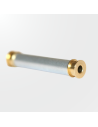
A terminal is a small metal piece, generally made of brass or conductive alloy, that is crimped or soldered to the end of the wire that connects the guide to the motor. Its function is to create a solid and low-resistance contact point between that wire and the braid that touches the track.
The braid collects the current from the track, passes it to the terminal, and from there to the wire that reaches the motor. If that contact is poor —due to a rusty terminal, poorly crimped, or an inappropriate size— the current suffers a voltage drop that directly translates into power loss. In competition cars, where every milliamp counts, a bad terminal can mean tenths of a second per lap without the driver understanding why the car does not respond as it should.
Even in recreational use, a faulty terminal causes sparks, power cuts, or erratic behaviour that makes driving frustrating. Replacing them when reviewing the braids is a basic maintenance practice that extends the lifespan of the assembly and ensures smooth and predictable driving.
How to choose the right terminal
Not all terminals are the same or interchangeable. To choose correctly, several factors must be considered:
- Type of guide: clip guides —like those used by Slot.it or NSR— and screw guides have different internal designs, and the terminal must fit correctly in the designated housing. A terminal that is too large will not fit; one that is too small will be loose and the contact will be unstable.
- Wire diameter: the terminal must be crimped to the wire without play. If the inner diameter of the terminal is larger than that of the wire, the mechanical connection will be loose and increase electrical resistance. Check the diameter of the wire you are using before choosing the terminal.
- Length: some setups require longer terminals to correctly reach the braid housing. Standard 1/32 and 1/24 guides do not always share the same internal measurements.
- Material and quality: good quality brass terminals offer low resistance and good durability. Avoid generic terminals without material specification: they can oxidise or lose conductivity with use.
- Compatibility with the guide brand: although many terminals are compatible across brands, it is safest to use the specific terminals recommended by the guide manufacturer or those that have proven compatibility in competition.
Types of terminals and their differences
In the slot market, we mainly find two families of terminals according to the guide fastening system:
Terminals for clip guides
These are the most widespread in competition preparations. The braid is fixed to the guide using a clip or pressure system, and the terminal fits into a specific internal channel. Brands like Slot.it, NSR, or Scaleauto have their own guides with this system. The terminals tend to be shorter and more precise in their measurements, designed for clean and repeatable installations.
Terminals for screw guides
Present in more traditional guides or in some original car guides —like those incorporated in many standard Scalextric or Ninco models— the terminal is physically tightened using a screw that secures it to the guide. They are somewhat more tolerant regarding diameters, but still require that the crimping to the wire is correct to ensure good conductivity.
Terminals by scale
The 1/32 and 1/24 scales do not share terminals. 1/24 cars have larger guides, thicker wires, and larger terminals. Always ensure you buy terminals suitable for your car's scale.
Technical aspects worth knowing
Beyond physical compatibility, there are some technical concepts that help us understand why a good terminal makes a difference:
- Contact resistance: each joint between two conductors introduces a small resistance. In the electrical circuit of a slot car, there are several of these joints: track-braid, braid-terminal, terminal-wire, wire-motor. Minimising resistance at each point is key for the motor to receive the maximum possible current.
- Crimping vs. soldering: crimping is the standard technique for securing the terminal to the wire in most cases. However, some preparers prefer to solder the terminal to the wire to ensure maximum electrical contact and greater durability. Both techniques are valid if executed correctly.
- Oxidation: terminals exposed to moisture or dust from the racing environment can oxidise over time, increasing resistance. Using quality material terminals and conducting periodic reviews prevents this problem.
- Wire length: although it may seem like a minor detail, the length of the wire between the guide and the motor also influences the total resistance of the circuit. An excessively long wire increases resistance; one that is too short can create mechanical stress. The terminal is the starting point of that wire, and a good installation begins there.
Practical tips for installation and maintenance
Installing a terminal seems straightforward, but there are details that make the difference between a clean job and one that will cause problems after a few sessions:
- Use the right crimping tool: a crimping plier specifically for small diameter terminals ensures uniform pressure and a solid connection. Crimping with generic pliers can crush the terminal unevenly and leave the wire loose.
- Strip the wire accurately: remove only the insulation just enough for the copper to enter the terminal without leaving loose strands that could cause short circuits.
- Check the contact before closing the car: after installing the terminal and placing the braid, verify with a multimeter or simply by pushing the car on the track that the current reaches the motor correctly before closing the body.
- Replace terminals every time you change the braids: if you have already disassembled the guide to put in new braids, taking the opportunity to install new terminals costs nothing and ensures that the assembly works at one hundred percent.
- Store terminals in a dry place: they are small parts and prone to oxidising if stored in damp environments. A well-closed drawer or an electronic component box is sufficient.
Common mistakes to avoid
Although they are small parts, terminals concentrate some of the most common errors in slot car preparation:
- Using incorrectly sized terminals: this is the most common mistake. A terminal that is too small will not hold the wire well; one that is too large will not fit in the guide or will leave play. Always check the specifications before buying.
- Crimping without the right tool: a poorly executed crimp is worse than not crimping at all. The connection may appear solid visually but have very high electrical resistance.
- Not cleaning the contact area: if the guide or braid has dirt, grease, or corrosion residues, a new terminal will not solve the problem. Always clean the area before installing the terminal.
- Reusing old terminals: terminals are low-cost parts. It is not worth reusing a deformed one or one showing signs of oxidation when the risk of failure is high and the cost of replacing it is minimal.
- Ignoring polarity: in installations with colour-coded wires, ensure you respect the polarity. Reversing the wires can cause the motor to run in reverse, which in a quick test on the track may go unnoticed until the car shoots off in the opposite direction.
Recommendations by level and type of use
For beginners
If you are starting in slot racing or making your first preparations, the most practical option is to choose terminals from the same manufacturer as your guide. Brands like Slot.it or NSR include specific terminals for their own guides in their catalog, which eliminates compatibility doubts. Invest in a good crimping plier: it is a cheap tool that makes a big difference in the quality of the work.
For experienced competition users
If you prepare cars for championships or seek maximum performance, it is worth exploring higher quality terminals and trying the combination of crimping with a solder point to ensure maximum conductivity and durability. Many competition preparers have established a protocol for reviewing terminals and braids every certain number of sessions, regardless of their apparent visual condition.
For 1/24 scale users
The 1/24 market has its own specifications. Terminals for this scale are more robust and designed for thicker wires. Do not attempt to adapt 1/32 terminals to 1/24 guides: the result will be a poor connection that can ruin a racing session.
| Type of guide |
Fastening system |
Common scale |
Reference brands |
| Clip guide |
Pressure / clip |
1/32 |
Slot.it, NSR, Scaleauto |
| Screw guide |
Tightening screw |
1/32 |
Scalextric, Ninco, Avant Slot |
| Competition guide 1/24 |
Reinforced clip or screw |
1/24 |
NSR, Scaleauto |
Frequently asked questions about slot terminals
How often should I change the terminals?
There is no fixed rule, but it is most advisable to check them every time you change the braids or when doing a general review of the car. If you notice power loss or erratic behaviour and have ruled out other causes, check the condition of the terminals.
Can I use any terminal in any guide?
No. The terminal must be compatible with the wire diameter and the guide housing. Check the specifications of the guide manufacturer to ensure you choose the correct terminal.
Is it better to crimp or solder the terminal to the wire?
Both techniques work well if executed correctly. Crimping is faster and does not require a soldering iron; soldering offers greater mechanical and electrical security. Many preparers combine both: crimping plus a solder point.
Are terminals from different brands interchangeable?
It depends on the design of the guide. Some terminals are compatible across brands because they share standard measurements; others are exclusive to a specific guide. Always check compatibility before purchasing.
Does the terminal affect the speed of the car?
Yes, indirectly. A poor quality or poorly installed terminal introduces electrical resistance that reduces the current reaching the motor, which translates into less power and therefore less speed and response.
What tool do I need to install terminals?
A crimping plier for small diameter terminals is sufficient for most installations. If you also want to solder, you will need a fine-tipped soldering iron, solder, and flux.
Do 1/32 terminals work for 1/24?
No. The scales have guides and wires of different dimensions. Using 1/32 terminals on a 1/24 guide will result in a poor connection or directly an impossible installation.
Where can I buy replacement terminals?
In specialised slot shops like Ministry of Hobby, where you will find terminals for the guides of the most used brands in competition and regular racing, with the guarantee that they are compatible with the systems sold in the same catalog.
What happens if the terminal is loose in the guide?
A loose terminal causes intermittent contact between the braid and the wire: the car may jerk, lose power abruptly, or simply stop. It is one of the most difficult faults to diagnose if the guide is not physically inspected.
Is it necessary to clean the terminals before installing them?
If they are new, generally not. But if you have stored them for a long time or suspect superficial oxidation, a light sanding with fine sandpaper or cleaning them with a dry cloth is sufficient to ensure good contact.