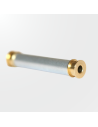
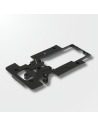
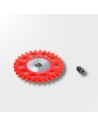
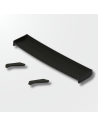
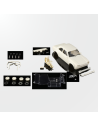
The chassis is the backbone of any slot car. Everything that affects track behaviour —traction, cornering response, high-speed stability, current transfer— depends to a greater or lesser extent on how the chassis is built and prepared. It doesn't matter whether you race on a home circuit or in a federated competition: understanding which components make up the chassis assembly and how they interact with each other makes the difference between a car that runs well and one that truly performs.
In this section, you will find everything you need to work on your car's chassis: from wear parts to upgrade pieces that change track behaviour. Guides, braids, motor mounts, axles, motor supports, screws, silentblocks, ballast… each element has its function and, when chosen correctly, adds up.
If you are starting to prepare your first car, here you will understand what each part is and why it matters. If you have been in the hobby for a while and are looking to fine-tune to the tenth, you will also find what you need. This section covers brands such as NSR, Slot.it, Scaleauto, and Avant Slot, with original spare parts and aftermarket pieces that have proven their value on the track for years.
What are chassis spare parts and why are they important
The slot chassis is not a single piece, but a set of components that work together to transmit power, maintain the geometry of the car, and ensure electrical contact with the track. When one of these components fails, wears out, or is simply not properly adjusted, the car's performance visibly declines.
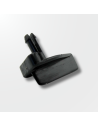
Chassis spare parts include both high-quality functional pieces —such as the guide, which is the element that keeps the car on the track and collects current— and structural components that define the geometry of the assembly, such as motor mounts or axle supports. This category also includes fine-tuning elements: ballast to redistribute weight, silentblocks to isolate vibrations, or replacement parts that allow a damaged chassis to be returned to its original state.
Keeping the chassis in good condition is not just a matter of performance: it is also a matter of longevity. A well-prepared car with the correct components lasts much longer, behaves predictably, and is much easier to adjust according to the track or racing conditions.
How to correctly choose chassis spare parts
The first question to ask before buying any spare part is compatibility. Not all spare parts are universal: an NSR guide is not necessarily interchangeable with a Slot.it guide, and a mount designed for inline motorisation does not work for a sidewinder setup. Before adding any part to your cart, it is advisable to check the specifications of the chassis you are working with.
The second factor is the track system for which the car is prepared. Cars designed for universal track (Scalextric, Ninco) and those prepared for sport track (Scaleauto, Slot.it) have different geometries and guide heights. Using parts designed for one system in a car meant for the other can lead to contact issues, derailments, or erratic behaviour on track.
The third point is the type of use. A competition car that runs hundreds of laps per session needs more durable and, at times, more precise spare parts than one that is used occasionally. For championship use, it is advisable to opt for brands like NSR or Slot.it, whose spare part engineering is directly linked to their competition experience. For more customised setups or resin cars, Avant Slot and Scaleauto offer very comprehensive options.
Finally, consider the level of modification allowed by the rules of the category in which you compete. Some championships restrict the spare parts allowed; others allow free preparation. Knowing the regulations before preparing the car saves you surprises on race day.
Main types and differences of chassis spare parts
Guides
The guide is the element that fits into the track and keeps the car on track. It also acts as the first point of current collection, along with the braids. They come in different heights, angles, and materials. Lower guides provide greater stability on smooth tracks; higher ones better tolerate irregularities. In competition, the goal is to find the guide that best adapts to the type of track and driving style.
Braids
Braids are the flexible conductors that run from the guide to the motor, passing through the chassis contacts. They are wear parts: with use, they compact, get dirty, and lose conductivity. Changing them regularly is one of the most effective and cheapest maintenance improvements available. They come in different thicknesses and materials; thicker copper braids offer better conductivity for high-demand motors.
Motor mounts
The motor mount is the support that fixes the motor to the chassis and defines its position relative to the rear axle. Its design determines the type of motorisation: a sidewinder mount positions the motor transversely to the axle, while an inline mount places it in line with the axle, lowering the centre of gravity. There are also anglewinder mounts, which position the motor at a specific angle relative to the rear axle. Changing the mount often means completely changing the character of the car.
Axles and supports
The rear axle transmits power from the motor to the wheels. Its diameter, length, and material influence the car's response. Axle supports (also called bearings or bushings) reduce friction and keep the axle aligned. In competition, the goal is to achieve the least amount of play possible and the highest precision in turning.
Ballast and screws
Ballast allows for weight redistribution of the car to improve traction or balance in corners. Small masses of metal strategically placed can significantly change track behaviour. Precision screws, on the other hand, ensure that the entire assembly is securely fastened without adding unnecessary weight.
Technical aspects we need to know
Working with chassis spare parts involves understanding some basic technical concepts. The first is the difference between the three main types of motorisation: sidewinder (motor parallel to the rear axle), inline (motor perpendicular to the axle, in line with the car), and anglewinder (motor at an angle to the rear axle). Each configuration has its own advantages: the sidewinder is the most compact and common in 1/32; the inline lowers the centre of gravity and improves stability; the anglewinder offers a compromise between the two and is common in advanced competition setups.
The second key concept is the height of the guide. A guide that is too high causes the car to "float" over the track and lose electrical contact easily. A guide that is too low can get caught on track joints. The correct adjustment depends on the track system used.
The third aspect is the alignment of the assembly. A slightly bent axle, a poorly fixed mount, or a worn support generates vibrations, uneven wear on the tyres, and loss of effective power. Before seeking more speed, it is advisable to ensure that the chassis is perfectly aligned.
Finally, the electrical conductivity of the assembly —guide, braids, contacts— directly influences the response of the controller. A car with poor conductivity seems to have a weak motor even if the motor is in perfect condition. Checking and cleaning the electrical contact points is part of the basic maintenance of any chassis.
Practical tips for use, maintenance, and preparation
Chassis maintenance starts with cleaning. Dust, tyre debris, and dirt accumulated on the track transfer to the chassis and especially to the braids and guide. Cleaning these elements every few race sessions extends their lifespan and maintains electrical performance.
Periodically check the condition of the braids. If they are flattened, blackened, or lack elasticity, it is time to change them. The cost is minimal and the improvement in response is immediate.
Before each competition session, check that the guide is securely fastened and has the correct lateral play: it should be able to move freely but not excessively. A guide that is too tight generates resistance; one that is too loose causes instability.
When adjusting the ballast, do so systematically: change one thing at a time and test the result before modifying another parameter. Otherwise, it is very difficult to know which change improved or worsened the behaviour.
If you use lubricant on the axles or gears, do so sparingly. Too much lubricant attracts dirt and can get onto the tyres, reducing traction. Always use products specifically designed for slot and apply the minimum amount necessary.
Common mistakes to avoid
Mixing incompatible spare parts. Using a guide designed for sport track on a universal track circuit, or installing a mount unsuitable for the chosen motor, are mistakes that generate difficult-to-diagnose problems. Always check compatibility before assembling.
Ignoring braid wear. Many enthusiasts look for the cause of poor performance in the motor or tyres without first checking the braids. It is the first point to check in any electrical response issue.
Over-tightening screws. Plastic chassis and some metal ones have tight tolerances. Over-tightening can deform the chassis or strip threads. Use the appropriate tools and do not force.
Not checking alignment after assembly. After changing a mount, axle, or any structural component, always check that the assembly is correctly aligned before putting the car on track.
Using generic spare parts without verification. The market has low-quality parts that seem compatible but do not meet the necessary tolerances. For competition, always opt for brands with a proven track record.
Recommendations for beginners and advanced users
If you are starting
Start by understanding your car well: identify what type of chassis it is, what motorisation system it uses, and what track it is prepared for. Before modifying anything, ensure that all original components are in good condition. The first spare part that is almost always worth changing in a beginner's car is the braids: it is cheap, easy to do, and the result is immediately noticeable.
Do not rush to buy many parts at once. It is better to understand the function of each component well before modifying it. If you have doubts about compatibility, ask: at Ministry of Hobby, we have real knowledge of the sector and can guide you.
For advanced users
If you already have experience preparing chassis, you will know that small details make a difference in competition. Precision mounts from NSR or Slot.it, straightened axles, ball bearings, or competition guides are investments that are justified when the level of demand is high.
In advanced setups, the balance between all subsystems becomes especially important: a precision mount is of no use if the braids have poor conductivity, or perfect tyres if the axle has play. Chassis preparation is a collective effort, and real improvement comes from fine-tuning all elements coherently.
For federated competition, always check the regulations of your category: some championships limit the spare parts allowed or establish minimum weights that affect the use of ballast.
| Component |
Main function |
Review frequency |
Reference brands |
| Guide |
Keep the car on track and collect current |
Each session |
NSR, Slot.it, Scaleauto |
| Braids |
Electrical conduction guide-motor |
Every few sessions |
NSR, Slot.it, Avant Slot |
| Motor mount |
Position and type of motorisation |
When changing motor or configuration |
NSR, Slot.it, Scaleauto |
| Rear axle |
Power transmission to wheels |
When detecting vibration or noise |
NSR, Slot.it |
| Axle supports |
Reduce friction and maintain alignment |
When changing axle or due to wear |
NSR, Slot.it, Avant Slot |
| Ballast |
Weight redistribution |
According to tuning adjustment |
NSR, Scaleauto |
Frequently asked questions
Are all chassis spare parts compatible between brands?
No. Each brand has its own tolerances and geometries. Some parts, such as certain guides or standard diameter axles, may be interchangeable, but it is safest to verify specific compatibility before purchasing. In the product sheet of each item, we indicate compatibility when it is confirmed.
What is the difference between a guide for universal track and one for sport track?
The guide for universal track (Scalextric, Ninco) has a geometry adapted to the width and depth of that type of track. The guide for sport track (Scaleauto, Slot.it) is designed for a narrower and deeper track. Using the incorrect guide can cause derailments or poor electrical conduction.
How often should braids be changed?
It depends on usage. In competition, many preparers check or change them every few sessions. In home use, checking their condition every month is usually sufficient. If you notice that the car responds worse or that speed is not consistent, the braids are the first thing to check.
Which is better, sidewinder or inline motorisation?
It depends on the car, the track, and the driving style. The sidewinder is the most common in 1/32 and offers good overall balance. The inline lowers the centre of gravity and can provide more stability in fast corners, but the setup is more complex. There is no universal answer: the best approach is to understand the characteristics of each configuration and choose based on use.
Can I improve the chassis of a beginner's car with competition spare parts?
Yes, but with criteria. In some cases, replacing the braids or guide with higher quality parts in a beginner's car yields very visible results. However, installing competition parts in a chassis that is not prepared to take advantage of them may not make sense. Start with the components that have the most impact and are easiest to install.
Does ballast always improve performance?
Not necessarily. Ballast is a tuning tool: when placed correctly, it improves traction and balance; when placed poorly, it can worsen behaviour. It should be tested methodically, always considering the total weight of the car and the championship rules if you are competing.
What happens if the rear axle has play?
An axle with play generates vibrations, uneven wear on the tyres, and loss of effective power. It can also affect transmission and shorten motor life. If you detect that the axle moves laterally more than normal, check the supports and replace any that are worn.
What does it mean for a mount to be of the anglewinder type?
An anglewinder mount positions the motor at a specific angle relative to the rear axle, combining characteristics of both sidewinder and inline. It is a common configuration in advanced setups that seek a compromise between compactness and low centre of gravity.
Do chassis spare parts also work for resin cars?
It depends on the manufacturer. Brands like Avant Slot produce resin cars with their own chassis and specific spare parts. In general, a resin car can use aftermarket spare parts as long as they are compatible with the chassis geometry. Always verify compatibility before purchasing.
How do I know if my guide is in good condition?
A guide in good condition has elastic braids with good conductivity, a central pin without excessive wear, and a blade without cracks or deformations. If the car frequently derails in slow corners or the electrical response is irregular, check the guide before looking for another cause.