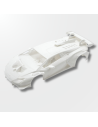
Plastic is undoubtedly the king material of modelling. It is present in almost every piece we touch: from the body of a slot car to the helmet of a miniature soldier, including the frames of static models, diorama elements, or spare components for circuits. Understanding how this material behaves, what variants exist, and how to work with them makes a huge difference in the final result of any project.
If you have been in the hobby for a while, you know that not all plastic is the same. Hardness, porosity, flexibility, and response to paint or glue vary depending on the type of polymer, the manufacturing process, and the intended use. A silicone tyre for a racing car, an injected ABS body, or a plastic profile for building structures in a diorama are all "plastic," but they behave completely differently on the workbench.
In this section, you will find everything you need to know to choose, prepare, and work with plastic materials in any modelling discipline: slot, static models, figures, and dioramas. We review the most common types, their technical properties, the most suitable tools and adhesives for each case, and the mistakes to avoid whether you are a beginner or have years of experience behind you.
Whether you are looking for a replacement body, profiles for scratch building, sheets for texturing, or simply want to better understand the material you work with every day, here is the information you need to make informed decisions.
What is plastic in the context of modelling and why it matters
The term "plastic" encompasses a huge family of synthetic polymer materials with very different properties. In the world of modelling and slot, the most common are ABS (acrylonitrile butadiene styrene), polystyrene (PS), polycarbonate (PC), polyurethane (PU), and various formulations of epoxy or polyester resin. Although technically resins are sometimes treated as a separate category, in practice they share the workbench with other plastic materials.
ABS is probably the most widely used in production slot car bodies. It is impact-resistant, easy to sand, and accepts acrylic and spray paint well if the surface is properly prepared. Polystyrene, on the other hand, is the reference material for static models: it accepts solvent-based contact glue, is easy to cut, and can be worked with basic tools. Polycarbonate is more flexible and translucent, making it ideal for parts like windows or lightweight high-strength bodies.
In figures and dioramas, polyurethane and resin gain prominence because they allow reproductions with a level of detail that injected plastic cannot match. The surfaces are more porous and require different preparation before painting, but the final result justifies the effort.
Understanding what type of plastic you are working with is not a minor technicality: it determines what glue to use, how to prepare the surface, which paints adhere better, and how much mechanical strength you can expect from the assembly. Working with the wrong material or using inappropriate techniques is the number one cause of frustrations in the workshop.
How to correctly choose plastic for your project
The choice of plastic material depends on three fundamental factors: the final use of the piece, the intended manufacturing or working process, and the level of detail required.
If you need a body for a racing slot car, thermoformed or injected ABS is your best ally: lightweight, resistant to the usual impacts on track, and easy to touch up. If, on the other hand, you are looking for maximum fidelity in reproducing a static model or a figure, polyurethane resin offers details that injected plastic cannot reproduce with the same clarity.
For scratch building or diorama constructions, polystyrene sheets and profiles are a classic and very versatile choice. They cut cleanly with a craft knife, bond with solvent adhesives, and can be sanded, painted, and textured without complications. Profiles in the shape of angles, tubes, rods, or channels allow for building structures, improvised vehicles, or architectural elements with great creative freedom.
When choosing, also consider the compatibility with the adhesives and paints you will be using. Not all glues work on all plastics: cyanoacrylate adheres well to resins and ABS, but can attack polycarbonate surfaces. Solvent adhesives like Tamiya Extra Thin are ideal for polystyrene but are not suitable for resin. Always confirm the type of material before opening the bottle.
The thickness also matters. A very thin sheet is perfect for simulating metal plates or flat surfaces, but it can deform with heat or pressure from the airbrush. A thicker sheet offers rigidity but makes curved cuts more difficult. Choose according to what the project demands, not based on what you have on hand.
Main types and differences
Let’s look at the most common types of plastic in our hobby and how they differ in practice:
- Polystyrene (PS): the classic for boxed models. White or grey, easy to cut, sand, and glue with solvent adhesives. Ideal for scratch building and kit repairs.
- ABS: harder and more impact-resistant than polystyrene. Very common in production slot car bodies and structural parts. Requires priming before painting to ensure adhesion.
- Polycarbonate (PC): flexible and translucent. Used in ultra-lightweight bodies for racing slot cars and in model windows. Difficult to bond with conventional adhesives; low-viscosity cyanoacrylate or specific adhesives are recommended.
- Polyurethane resin: extremely high level of detail, surfaces with greater porosity than injected plastic. Ideal for figures, diorama accessories, and high-end bodies like those produced by Avant Slot at an industrial level. Requires specific priming and prior sanding.
- Photopolymer resin (3D printing): increasingly present in the hobby for custom parts, conversions, and accessories. The surface can be fragile if not properly cured, and needs cleaning with isopropyl alcohol before painting.
- Generic injected plastic: used for many accessories, tracks, and low-cost parts. Variable in quality; it is advisable to check flexibility and glue response before using it in projects where the bond is critical.
In practice, we can combine several of these materials in the same project. A diorama may have a polystyrene base, resin figures, and 3D printed details. The key is to know each material to treat it as it deserves.
Technical aspects we need to know
Working well with plastic involves understanding some technical concepts that, once internalised, save a lot of headaches.
Surface preparation
Most plastics, especially ABS and resins, need preparation before receiving paint. The usual process includes cleaning with warm water and neutral soap to remove residues of release agent or grease, a light sanding with fine grit sandpaper (400-800) to create micro-roughness, and the application of a compatible primer. Without this step, the paint may not adhere, crack, or peel over time, regardless of the quality of the paint used.
Adhesives and compatibilities
Using the wrong adhesive can ruin a piece beyond recovery. As a general rule:
- Polystyrene → solvent adhesive (dissolves and fuses the material).
- ABS and resins → medium or low viscosity cyanoacrylate.
- Polycarbonate → specific cyanoacrylate or two-component adhesives.
- Photopolymer resin → cyanoacrylate after proper curing and cleaning.
Temperature and deformation
Plastic is sensitive to heat. ABS bodies can deform if left inside a car parked in the sun, and very thin polystyrene parts can warp if spray paint is applied too close or with heavy coats. Always work in thin layers and allow to dry between applications.
Flexibility vs. rigidity
The flexibility of a material is not necessarily a defect: in slot tyres, the hardness of the plastic or silicone compound directly affects grip and cornering behaviour. Softer tyres offer more traction but wear out faster; harder ones are more stable but less adherent. This balance is one of the most common adjustments in tuning a racing car.
Practical tips for use, maintenance, and preparation
Here are some of the most valuable tips for day-to-day workshop work:
- Always sand dry before priming. Wet sanding on plastic can introduce moisture into the pores of resins and hinder subsequent adhesion.
- Pre-soak resin parts with low-pressure spray primer. Polyurethane resins are porous and "absorb" the first coat. It’s better to apply two thin coats of primer than one thick one.
- Use raking light to detect imperfections. Before painting, illuminate the piece from a raking angle: you will see mould marks, burrs, and scratches that are invisible under normal light.
- Do not force the demoulding of cast parts. If a resin part does not come cleanly out of the mould, a bit of release agent or alcohol at the contact point helps more than brute force, which can fracture fine details.
- Store sheets and profiles horizontally. Thin polystyrene sheets can warp if stored vertically for a long time. Keep them flat or in appropriate rolls.
- Check the expiry date of cyanoacrylate adhesives. Old cyanoacrylate does not cure properly and can leave weak joints or whiten the surface of the plastic.
- Paint in thin and multiple layers. Whether with an airbrush or spray, it is better to apply three thin layers than one thick one. Heavy layers generate micro-stresses that can crack the paint as it dries.
Common mistakes to avoid
Being in the hobby for a while teaches you to avoid certain mistakes that initially seem inevitable. The most common when working with plastic are:
- Not identifying the type of plastic before gluing or painting. This is the most common and costly mistake. A few minutes spent researching the material can save you hours of repair.
- Omitting priming on ABS or resin. The paint may seem to adhere well, but without priming it will peel off at the slightest touch, especially on frequently handled parts like slot car bodies.
- Using too much adhesive. In plastic, more glue does not mean more strength. Excess cyanoacrylate can whiten the surface, and excess solvent adhesive can dissolve fine details.
- Sanding with too coarse a grit. A grit of 80 or 120 leaves deep marks that paint cannot cover; always start with fine grit (minimum 400) on plastic.
- Mixing resins without respecting proportions. If you are working with two-component resins, the exact mixing ratio is critical. An error in the ratio can result in fragile, sticky parts or ones that do not cure at all.
- Ignoring curing times. Handling resin parts before they are fully cured can deform them or leave permanent fingerprints.
- Painting on plastic freshly removed from the mould without cleaning. The release agents used in production are invisible but prevent paint and glue adhesion. Always wash before working.
Recommendations for beginners and advanced users
If you are starting
Start with polystyrene sheets or profiles: it is the most forgiving material, easy to find, easy to work with, and compatible with the most common glues and paints. Static model kits in injected plastic are also an excellent training ground for learning to prepare surfaces, remove burrs, and work with modelling glues before moving on to more complex materials like resin.
Get a basic set of sandpapers with varying grits (220, 400, 600, 800), a new blade craft knife, solvent adhesive, and medium viscosity cyanoacrylate. With that and a can of spray primer, you can tackle most beginner projects.
Do not skip priming. Although it may seem like an unnecessary step when you are eager to paint, the difference in the final result is enormous. Brands like Vallejo, Tamiya, or Ammo have very reliable primers for beginners, both in spray and for airbrush.
If you already have experience
The next level in working with plastic involves incorporating polyurethane resins for conversions and figure customisation, exploring 3D printing with photopolymer resin for unique parts, and mastering texturing and finishing techniques on different polymers.
In the slot racing field, tuning with tyres of different hardness is a variable that many competitors underestimate. Knowing the relationship between tyre composition, track type, and temperature conditions gives you a real advantage in competition. Brands like NSR, Slot.it, or Scaleauto offer catalogues of tyres with different hardnesses and profiles; it is worth getting to know them in depth.
For advanced modellers working with airbrushes, exploring the compatibility between paints from different brands (Vallejo, Kaleido, Tamiya, Ammo) and the different types of plastic will allow you to optimise results and reduce preparation times.
| Type of plastic |
Main use |
Recommended adhesive |
Primer needed |
Difficulty of work |
| Polystyrene (PS) |
Models, scratch building |
Solvent adhesive |
Optional |
Low |
| ABS |
Slot bodies, structural parts |
Cyanoacrylate |
Yes, always |
Medium |
| Polycarbonate (PC) |
Lightweight bodies, windows |
Specific cyanoacrylate |
Yes |
Medium-high |
| Polyurethane resin |
Figures, accessories, high-end bodies |
Cyanoacrylate |
Yes, always |
Medium-high |
| Photopolymer resin (3D) |
Custom parts, conversions |
Cyanoacrylate after curing |
Yes |
High |
Frequently asked questions
How do I know if a piece is ABS or polystyrene?
A simple trick: apply a drop of acetone in a hidden area. Polystyrene dissolves quickly; ABS holds up much better. You can also look at flexibility: ABS can withstand more deformation without breaking than polystyrene, which tends to break cleanly.
Can I glue resin with solvent adhesive?
No. Solvent adhesive only works with plastics that dissolve in that solvent (mainly polystyrene). It will have no effect on resin. Use cyanoacrylate or, for important structural joints, a two-component epoxy adhesive.
Is it always necessary to prime before painting?
It depends on the material. In properly prepared polystyrene, some experienced modellers paint directly with acrylics without priming and achieve good results. In ABS, polycarbonate, or resin, priming is practically essential to ensure long-term adhesion.
What sandpaper do I use to remove mould marks on a body?
Start with 400-600 grit to remove the mark, then move to 800 and finish with 1000-1200 to leave a uniform surface before priming. If the mark is deep, you can start with 320, but do not go lower than that on ABS bodies if you do not want to introduce difficult-to-cover scratches.
Are all slot tyres made of the same material?
No. There are tyres made of natural rubber, silicone, polyurethane, and mixed compounds. Each material offers different behaviour on track in terms of grip, durability, and temperature response. In competition, the choice of compound is a tuning variable as important as the motor or gear ratio.
Can I use spray paint directly on 3D printed resin?
Yes, but only after properly curing the piece, cleaning it with isopropyl alcohol, and applying a compatible primer. Uncured photopolymer resin contains monomers that can interfere with adhesion and are also skin irritants.
Are resin bodies more fragile than ABS ones?
In general, yes: resin is stiffer but more fragile under strong impacts. Resin bodies from brands like Avant Slot are designed to offer maximum detail with reduced weight, not to withstand repeated blows. They are ideal for collection or careful use on a private track.
How do I prevent cyanoacrylate from whitening the plastic?
Whitening or "frosting" of cyanoacrylate occurs due to the adhesive's fumes during curing. To avoid it: use the minimum amount necessary, apply it at the joint area and not on the visible surface, and ventilate the work area well. There are also cyanoacrylates formulated specifically to minimise this effect.
Can I thermoform plastic at home to make bodies?
Yes, with sheets of polystyrene or ABS and a pre-made mould. You need a uniform heat source (domestic oven at moderate temperature or heat gun at controlled distance) and a heat-resistant mould. It is a technique that requires practice but opens up enormous possibilities for customisation and scratch building.
What is the difference between polyurethane resin and epoxy resin?
Polyurethane resin cures faster, is somewhat more flexible, and is widely used for finely detailed parts like figures and modelling accessories. Epoxy resin is mechanically stronger, takes longer to cure, and is commonly used in structural applications or when maximum hardness is needed. In modelling, the most common for casting parts is polyurethane.
How do I properly store bodies and plastic parts?
Away from direct sunlight (UV degrades and yellows many plastics over time), in an environment with stable temperature and without excess humidity. For painted and finished parts, store them in boxes or covers that prevent rubbing and dust. Unassembled slot car bodies are better preserved in their original boxes or in individual non-abrasive fabric covers.