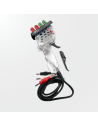
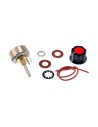
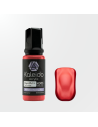
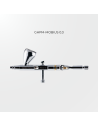
There are parts of the hobby that are not visible but make the difference between a car that runs with precision and one that vibrates, scrapes, or stops prematurely. Lubricants are one of them. Small bottles, syringes, or sprays that go unnoticed on a workbench, but determine how long a motor lasts, how smoothly a guide responds in each corner, or whether the rear axle of your slot car turns with the fluidity it deserves.
In the world of slot, tolerances are very tight. We are talking about axles measured in tenths of a millimetre, brass or ceramic bearings, crowns and pinions that rotate at thousands of revolutions per minute. An excess of lubricant can be as detrimental as its absence: excess oil reaches the braids, contaminates the track, or alters the car's behaviour in ways that are difficult to diagnose. Proper lubrication is not just about applying product: it is knowing what type, where, how much, and how often.
But lubricants are not exclusive to slot. In static modelling, the joints of articulated figures, the mechanisms of dioramas with moving parts, or even the maintenance of workshop tools also require attention. And in the realm of diecast and collectible miniatures, certain specific products help preserve mechanisms or protect metal surfaces from oxidation.
At Ministry of Hobby, we have selected a catalogue of lubricants specifically thinking about this: for the user who knows what they are looking for and for those who are still unsure but want to do it right. You will find low-viscosity oils for motors and axles, denser greases for gears and crowns, specific products for ceramic bearings, and options for the general maintenance of tracks and mechanisms. All with technical information to make the choice easy and accurate.
What are lubricants for slot and modelling and why are they important
A lubricant is any substance that, placed between two surfaces in contact and in motion, reduces friction between them. Practically, this means less heat, less wear, and more durability for each component. In the context of slot and modelling, this is particularly relevant because we work with pieces of very small dimensions subjected to relatively high stresses for their size.
A slot motor can spin between 15,000 and over 30,000 rpm depending on the configuration. The rear axle, bearings, crown, and pinion are subjected to this cadence continuously during each session. Without an appropriate film of lubricant, wear is exponential: at first, it is hardly noticeable, but over time, play, noise, loss of power, and ultimately failures that could have been avoided with basic maintenance appear.
In the case of static models or dioramas with moving elements, lubrication does not seek performance but conservation: to ensure that joints do not become stuck, that mechanisms do not seize over time, and that metal does not oxidise. The uses are different, but the logic is the same: to protect so that everything works or is preserved better.
How to correctly choose the lubricant you need
The first question you should ask yourself is: What do I want to lubricate? There is no single lubricant suitable for everything. Each area of the car or model has its own working conditions and requires a specific product.
- Motor: requires very low viscosity oils, fluids that penetrate the motor's bearings without flooding it. A product that is too thick can hinder the rotor or attract dust particles.
- Axles and bearings: also require light oils, applied precisely. The amount is key: a tiny drop, well placed, is sufficient.
- Crown and pinion: here, a specific grease for gears is recommended, which is denser and stays in place longer without being thrown off.
- Guide and front area: care must be taken. The guide is in contact with the rail, and any residue of lubricant that reaches the braids or the rail negatively affects electrical conduction and grip.
- Track and rail: there are specific cleaning and conditioning products for tracks, which are not exactly lubricants but are part of general maintenance.
The second criterion is viscosity. Oils are classified by their fluidity: the more fluid, the better they penetrate small spaces and the faster they distribute. Greases are more viscous and remain on exposed surfaces longer. Choose based on the area and conditions of use.
Finally, consider compatibility with materials. Some solvents present in poorly formulated lubricants can attack plastics or rubbers. Always check that the product is suitable for the materials you are working with.
Types of lubricants and their main differences
The market offers several categories of lubricants aimed at slot and modelling. Knowing them saves you errors and money:
Low viscosity oils
These are the most common in the slot workshop. Liquids, almost transparent, designed to be applied with a needle in motors, bearings, and axles. They penetrate well into small spaces and form a thin but effective film. Brands specialised in slot offer formulas specifically designed for these tolerances. Use them drop by drop or with precision applicators to control the dosage.
Greases for gears
Denser and stickier, they are formulated to stay on the crown and pinion without moving with motion. They protect the gear teeth from wear and reduce transmission noise. Their application should also be very moderate: an excess can reach the motor or axle and cause problems.
Spray lubricants
Useful for the general maintenance of larger mechanisms, workshop tools, or tracks with articulated sections. They are not the first choice for the inside of a slot motor, where precision of application is crucial, but they are practical in other contexts of modelling or the workshop.
Synthetic vs. mineral-based products
Synthetic lubricants offer greater thermal stability, longer durability, and better performance in extreme conditions. For competitive use or high-performance motors, they are usually the preferred option. Mineral-based lubricants are more economical and perfectly valid for recreational use or basic maintenance.
Protective and anti-corrosion lubricants
Targeted at diecast, metal miniatures, and tools. They do not seek to reduce friction in moving parts but to create a barrier against moisture and oxidation. Especially useful if you store collections in areas with temperature or humidity changes.
Technical aspects we should know
To get the most out of a lubricant, it is advisable to understand some basic technical concepts that govern its behaviour:
Viscosity
This is the resistance of a fluid to flow. A low viscosity oil is very fluid (penetrates easily); a high viscosity one is thicker (stays in place longer). For slot motors and bearings, low viscosity is the norm. For crowns and gears, a medium-high viscosity works better.
Flash point and thermal stability
Slot motors generate heat. A lubricant with low thermal stability can degrade quickly or even generate residues that dirty the motor. Synthetic-based products usually withstand the temperatures reached in an intense session better.
Compatibility with plastics
Some solvents attack the ABS or polycarbonate used in bodies, chassis, and internal parts. Before applying any product in areas close to plastic parts, check that it is rated as safe for these materials. Most oils specifically for slot are formulated with this in mind, but not all generic products on the market are.
Contamination of braids and rail
This is the critical point in slot. Oil that migrates from the motor or axle to the braids prevents clean electrical contact with the rail, causes current failures, and can stain the track. Poor lubrication—either by excess or by using the wrong product—is one of the most common causes of erratic behaviour in cars.
Practical tips for use and maintenance
- Less is more: in slot, the right dose is usually a fraction of a drop. Use needle applicators or syringes to control the amount precisely.
- Clean before lubricating: applying lubricant over dirt or old residues accumulates the mixture and can be worse than not lubricating. Use a specific cleaner to remove the previous product and start with a clean surface.
- Lubricate the bearings before mounting the axle: it is easier and more effective. Once everything is assembled, it is difficult to ensure that the product reaches where it should.
- Do not lubricate the guide or the braids: these areas must be clean to ensure electrical contact. If lubricant accidentally drips, clean it immediately with a cotton swab and an appropriate cleaner.
- Establish a routine: do not wait for the car to start performing worse to lubricate. A periodic check—every few sessions or after intense races—keeps everything in optimal condition.
- Store lubricants properly: seal the bottles well, keep them away from heat and direct light. Many synthetic-based products have a long shelf life if stored properly.
Common mistakes we should avoid
Using sewing or household oil
This is the classic mistake among beginners. Household oils are not formulated for the tolerances of slot: they are too thick, can easily attract dust, and do not offer the necessary thermal stability. The cost of a specific oil is minimal compared to the problems it prevents.
Over-lubricating
More is not better. Excess lubricant migrates to the braids, contaminates the rail, attracts dust, and creates a sticky mixture inside the motor that ultimately harms performance. A well-placed drop far exceeds five poorly applied ones.
Using the same product for everything
Motor, bearings, crown, and pinion have different needs. Using a thick grease in the motor or a very fluid oil in the gears is not the correct solution. Take a moment to identify each area and use the appropriate product for each one.
Not cleaning old lubricant before applying new
Lubricant degrades over time and use. If you add new product over the old, you mix fresh lubricant with contaminated residues. Clean first, then lubricate.
Forgetting maintenance until something fails
Preventive lubrication is much cheaper than corrective. When the car is already performing poorly or the motor is making strange noises, the damage may already be done. Regular checks prevent surprises and extend the lifespan of each component.
Recommendations for beginners and advanced users
If you are starting
You do not need a whole collection of lubricants from day one. With a low viscosity oil for motors and axles, and a specific grease for the crown, you cover the most common cases. Always apply with moderation, follow the manufacturer's instructions, and if you have doubts about where to put the oil, consult before acting: it is easier to add than to remove.
We also recommend learning to clean the track regularly. A clean track and well-maintained braids are as important as a well-lubricated motor.
If you already have experience
As you progress, especially if you practice slot in a competitive format, it is worth fine-tuning the choice of lubricants according to the type of motor, the conditions of the session, and the materials of the bearings. Ceramic bearings, for example, have different requirements than brass, and there are specific products for them. In competition, even the exact amount of lubricant can influence lap times.
Advanced users also pay attention to the interaction between the lubricant and the tyres: any contamination in the traction area can affect grip and alter behaviour in corners. A well-organised workshop, with each product identified and in its place, makes a difference in day-to-day operations.
| Area to lubricate |
Type of lubricant |
Viscosity |
Recommended amount |
| Motor (internal bearings) |
Specific oil for slot motors |
Very low |
1 minimal drop |
| Axles and external bearings |
Low viscosity oil |
Low |
1 drop per point |
| Crown and pinion |
Grease for gears |
Medium-high |
Thin layer on the teeth |
| Model mechanisms |
Oil or grease depending on size |
Variable |
Minimum necessary |
| Metals / collectible pieces |
Anti-corrosion protector |
Thin liquid |
Surface layer |
Frequently asked questions about lubricants
How often should I lubricate my slot car motor?
It depends on usage. In occasional recreational sessions, a check every 4-6 hours of running is sufficient. In competition or intensive use, it is advisable to check it before each important session. There is no universal rule: observe how the car responds and maintain a preventive routine.
Can I use machinery or sewing oil?
It is not recommended. These oils are not formulated for the tolerances of slot, are usually too thick, and can degrade with the heat of the motor, leaving residues. Always use products specific to slot or modelling.
Does the lubricant affect the performance of the motor?
Yes, both positively and negatively. A properly lubricated motor performs better, generates less heat, and lasts longer. One with excess lubricant can lose power or suffer electrical conduction failures if the oil reaches the braids.
Should I lubricate the guide?
No, in general. The guide should remain clean to ensure contact with the rail. If the guide shows wear or stiff movement, check if it needs replacement before resorting to lubricants.
What is the difference between oil and grease for slot?
The viscosity and method of application. Oil is fluid, penetrates easily, and is used in fast-rotating parts like motors and axles. Grease is dense, stays in place, and is used in gears and transmission. Each has its place and they are not interchangeable.
Do ceramic bearings need a special lubricant?
Yes. Ceramic bearings have different properties than brass and it is recommended to use specific oils for ceramics or very low viscosity. Some manufacturers even indicate that certain ceramic bearings work better with minimal lubrication. Always check the manufacturer's recommendations.
Can a slot track be lubricated?
The rail is not lubricated: it is cleaned. There are specific cleaning and conditioning products for tracks that improve electrical conductivity and grip, but they are not lubricants in the technical sense. Applying oil to the rail is a mistake that contaminates the braids of all cars.
Does lubricant expire?
Over time and with poor storage, some lubricants can degrade, lose properties, or thicken. Always store bottles tightly closed, in a cool place, and away from direct light. If an oil has changed colour, smell, or consistency, it is better to replace it.
What should I do if I accidentally lubricated the braids?
Clean it as soon as possible with a cotton swab slightly moistened with a contact cleaner or isopropyl alcohol. Ensure that the braids are completely dry before using the car again. If the problem persists, you may need to replace them.
Are slot lubricants suitable for static models or figures?
It depends on the use. If you have articulated figures or moving elements in a diorama, a low viscosity oil or fine grease can be useful. To protect metal parts from oxidation, use a specific anti-corrosion protector. The important thing is to always check compatibility with the materials of the piece.
How much lubricant should I apply to the crown and pinion?
A very thin layer on the teeth of the crown is sufficient. It is not necessary to soak the gear: excess lubricant moves with motion and can reach areas where it should not be. Apply with a needle or stick, spread evenly, and remove any excess before assembly.