When you have been in modelling or slot racing for a while, the collection grows faster than one expects. First, there are a few cars, then a box of spare parts, after that the paint bottles multiply and the jars of solvent start to take up space with no apparent order. Storage is not a minor issue: a poorly stored miniature gets scratched, an unprotected decal deteriorates, a misplaced small motor can ruin hours of preparation. Keeping everything organised is not just an aesthetic matter; it is a practical decision that directly affects the time you spend enjoying the hobby and the money you do not waste replacing parts that should be where you left them.
At Ministry of Hobby, we work with collectors, slot preparers, figure modellers, and diecast enthusiasts. They all share the same need: to know where everything is, to protect it while not in use, and to be able to access it without creating chaos. This section gathers the solutions we have been incorporating because they truly solve that problem, not just because they look good in a photo.
Whether you have a small work corner or a room dedicated exclusively to the workshop, there is a smart way to organise it. From compartments for tiny spare parts to boxes and cases for assembled cars, through modular systems that grow with you, the goal is always the same: that each piece has its place and that place is secure.
What we understand by storage and why it makes a difference
Storing is not the same as keeping. Keeping is putting something in a drawer and hoping it appears when you need it. Storing is having a system that protects, identifies, and facilitates access to each element of your collection or workshop.
In the context of modelling and slot racing, this has specific implications. A newly painted 1/32 resin car needs a support that does not press on the fenders or the antenna. A set of silicone tyres for racing deforms if stored under pressure or in an environment with unstable temperature. Vallejo or Tamiya acrylic paint bottles dry out if the cap is not perfectly airtight or if they are stored upside down without the proper adapter. Loose braids get tangled. 9-tooth pinions are practically invisible when they roll on the floor.
A good storage system prevents all those problems before they occur. And when you have been doing this for a while, you know that there is nothing more frustrating than searching for a spare part that you know you have but cannot find.
Storage also influences long-term preservation. Diecast miniatures in 1/18 or 1/43 scale, hand-painted competition cars, resin figures with their bases… all of that has value, whether sentimental, collectible, or economic. Protecting it well from the start is the most cost-effective decision you can make.
How to choose the right storage for your case
Before buying any solution, it is advisable to ask yourself some basic questions that greatly guide the decision.
What exactly are you going to store? It is not the same to organise slot spare parts (small pieces, classified by type and brand) as it is to store assembled cars (volume, fragility, need for support) or paint bottles (vertical position, frequent access, risk of spills). Each type of material has its requirements.
How often do you access it? The spare parts you use in each workshop session should be at hand, in trays or quick-access compartments. The collection cars that you do not usually touch can go in more closed boxes or display cases protected from dust.
How much space do you have? Modular solutions are very appreciated because you can start with little and add modules. If space is limited, vertical or stackable systems are your allies.
Do they travel with you? If you take the materials to races or meet-ups, you need cases or boxes with solid closures, interior protection, and that can withstand impacts. If everything stays at home, you can prioritise visibility and comfortable access.
With these answers clear, choosing becomes much easier and you avoid buying something that does not fit your way of working.
Main types and differences
The market offers many options, but not all serve the same purpose. These are the most useful categories in the field of modelling and slot racing:
Boxes with configurable compartments
These are the most versatile for small spare parts. They usually have movable dividers that allow you to adjust the size of each compartment according to what you are going to store. Ideal for organising motors, crown gears, pinions, braids, guides, wheels, and tyres separated by reference. The transparency of the lid is a detail that is appreciated: at a glance, you know what you have without opening anything.
Transport cases for cars
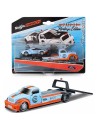
Designed to protect assembled cars during transport. They usually include shaped foam or securing systems to prevent the car from moving. They are essential if you are going to races or competitions. Some can hold several cars and have additional compartments for tools or emergency spare parts.
Paint bottle organisers
Vallejo, Tamiya, Kaleido, or Ammo paints come in different formats (dropper, jar, screw-top bottle) and are organised differently. There are rotating bases, tiered shelves, and specific racks for each format. A well-designed organiser allows you to find the colour in seconds instead of rummaging through the entire shelf.
Display stands and cases
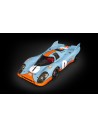
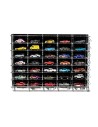
For collection cars, finished figures, or diecast that you want to show but also protect. Cases with lids control dust. Individual stands elevate the piece and allow it to be viewed from different angles. They are especially useful for miniatures in 1/18 scale or resin cars with a lot of paintwork.
Reusable airtight containers and bags
For storing decals, mask templates, loose model parts, or materials that deteriorate with humidity. Simple, economical, and very effective for what they do.
Technical aspects worth knowing
Storage has its own technical peculiarities that are not always mentioned but make a difference in practice.
Container materials. Plastic is the most common. For spare parts and tools, it is perfectly valid. For painted or resin parts that will be in prolonged contact with the surface, it is advisable that the interior be made of neutral foam or non-abrasive fabric, as some hard plastics can mark delicate finishes.
Closure and airtightness. Not all closures are the same. A closure that seems firm can open with a bump during transport. If you are taking cars to competitions, check that the closure can withstand lateral pressure, not just vertical.
Temperature and light. Acrylic paints, decals, and rubber parts (tyres, seals) degrade faster with heat and direct sunlight exposure. Storing these materials in a cool place and away from direct light significantly extends their lifespan.
Weight and stacking. If you are going to stack boxes, make sure that the ones at the bottom can withstand the weight without deforming. Some lightweight plastic organisers bend over time under pressure, which can compromise the contents.
Content identification. A labelling system, even if basic, multiplies the efficiency of storage. Nothing sophisticated is needed: a handwritten label on the side already prevents having to open each box to know what is inside.
Practical tips for organising your workspace and collection
Beyond the product you choose, the way you set up the storage system matters as much as the containers themselves. Some criteria that work well in modelling and slot racing workshops:
- Group by use, not just by type. The spare parts you use together in each session should be in the same box or tray, even if they are different types. Open fewer drawers, waste less time.
- What you use most, keep closer. Braids, spare guides, the most common tyres, and basic workshop tools should be within reach. What you use once a month can go further away or higher up.
- Leave room to grow. If you buy an organiser that is already full from day one, in two weeks you will have the previous problem plus the new one. Plan with margin.
- Review and purge periodically. Obsolete spare parts, cars you no longer use, dried paint bottles… take up space that could be useful. A semi-annual review of the workshop frees up resources and improves organisation.
- Do not mix incompatible materials. Storing solvents next to paints or decals is a mistake that can ruin valuable material if there is a spill. Keep liquids in a separate area and, if possible, in containers that contain the spill if it occurs.
Common mistakes to avoid
After years of seeing workshops and collections of all kinds, there are some mistakes that are repeated often and are easy to avoid if known in advance.
Buying without measuring. It seems obvious, but it happens constantly. An organiser that does not fit on the shelf, a case that does not fit in the car boot, or a display case that does not leave space for the current collection are mistakes that can be avoided with a tape measure before buying.
Storing loose parts without identification. That bag of mixed spare parts that "I will classify when I have time" is the source of many headaches. The time to classify is always now, not later.
Using inadequate boxes for finished cars. Storing a painted and detailed car in a cardboard box without interior protection risks scratches, broken antennas, or damage to mirrors. Interior protection makes a difference.
Ignoring preservation conditions. Storing paints next to a radiator, leaving silicone tyres in contact with greasy surfaces, or exposing diecast miniatures to direct sunlight for months has consequences that cannot be reversed later.
Buying quantity without criteria. Having many containers does not equate to being organised. A simple and well-thought-out system works better than an accumulation of boxes without hierarchy or logic.
Recommendations for beginners and advanced collectors
If you are just starting
You do not need to invest much from the beginning. A couple of boxes with configurable compartments for spare parts and a basic transport box for the car already provide a lot of utility. The important thing is to create the habit of putting everything in its place from the start: it is much easier to maintain order than to recover it once it has been lost.
If you also paint or work with models, a simple organiser for paint bottles will change your working experience from day one. Searching for the right colour among twenty crowded bottles is an unnecessary source of frustration.
If you already have experience and a significant collection
The key here is modularity and traceability. Systems that you can expand without having to reorganise everything, with clear identification of each compartment or box. If you have competition cars that travel with you regularly, investing in a good transport case quickly pays off in undamaged parts.
For diecast collections or resin cars with many hours of work, display cases with dust protection and individual stands allow you to visually enjoy the collection without sacrificing preservation. It is not just aesthetics: it is respect for the work invested.
| Type of storage |
Ideal for |
Transport |
Display |
| Box with compartments |
Spare parts, paints, small parts |
Yes |
No |
| Transport case |
Assembled cars, race sessions |
Yes |
No |
| Display case with lid |
Diecast collection, finished figures |
No |
Yes |
| Individual stand |
Resin cars, highlighted pieces |
Limited |
Yes |
| Paint organiser |
Vallejo, Tamiya, Ammo, Kaleido bottles |
No recommended |
No |
| Airtight container |
Decals, templates, sensitive material |
Yes |
No |
Frequently asked questions about storage in modelling and slot racing
What type of box is best for storing assembled slot cars?
Transport boxes with shaped foam or padded interiors are the safest option. They protect the body, mirrors, and antennas from impacts and scratches during transport or prolonged storage.
Can I use any plastic organiser for slot spare parts?
Yes, as long as the compartments are small enough to prevent the pieces from mixing. Movable dividers are very useful because they allow you to adapt the size to what you are storing at any given moment.
How do I store silicone tyres so they do not deform?
Store them without pressure on them, at a stable temperature, and away from greasy surfaces or solvents. A small airtight bag or an individual compartment is sufficient to keep them in good condition.
Do acrylic paints need any special storage?
They do not need cold storage, but they do require stable temperature, without excessive heat or direct sunlight exposure. Keeping them upright and with the caps tightly closed is the most important. A specific organiser for the bottle format you use (dropper, jar, screw-top bottle) greatly facilitates access and prevents spills.
How do I organise spare parts from different brands without mixing them?
The most practical approach is to assign a box or section of a box to each brand or type of spare part. Labelling, even if basic, is key. A box with compartments and handwritten labels already solves the problem in most workshops.
Is it worth getting a display case for diecast cars?
Yes, especially if they are 1/18 scale pieces or models with a lot of detail. Dust accumulation on a precision miniature is difficult to remove without risking damage to the finish. A display case with a lid protects and allows you to visually enjoy the collection at the same time.
What should I do with decals that I do not use immediately?
Store them in an airtight bag, flat and without bending, away from light and moisture. The paper of the decals is delicate and deteriorates quickly if not stored properly. Adding a small silica gel packet inside the bag greatly extends their lifespan.
Do transport cases also work for storing cars at home?
Perfectly. In fact, many enthusiasts use the same case for both transport and regular storage. The protection is the same in both cases.
How many cars can reasonably be planned for each transport box?
It depends on the design, but in general, standard transport cases for slot cars can hold between two and six cars in 1/32 scale, depending on whether the foam is shaped for each unit or if there are generic compartments. Always check the dimensions before buying.
Is there a specific storage system for modelling workshop tools?
Yes. Cases with individual closures for each tool, magnetic trays for small metal parts, and vertical stands for screwdrivers and files are common options. The important thing is that the tools do not collide with each other or with delicate parts.
Can I use the same storage for static models and slot cars?
It depends on the type. For spare parts and paints, perfectly. For assembled and finished models, it is ideal to separate by fragility and size. Large static models (boats, planes, tanks) require different supports than 1/32 scale slot cars.