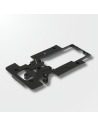
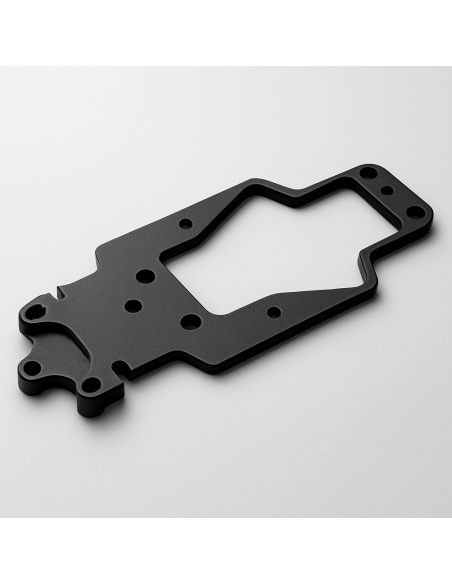
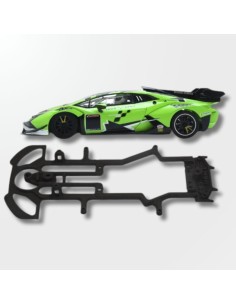
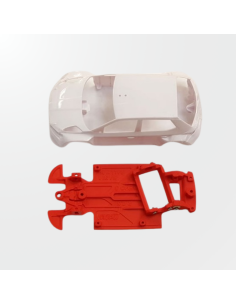
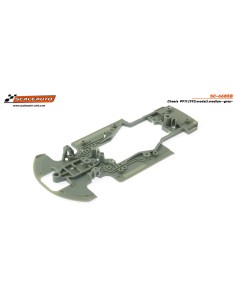
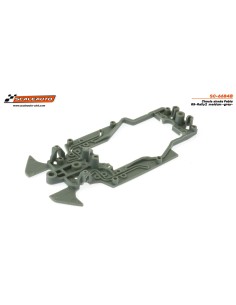
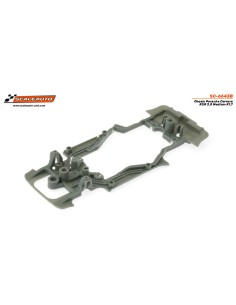
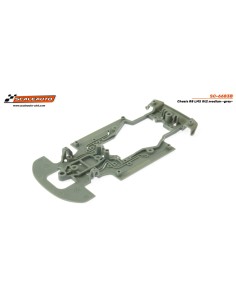
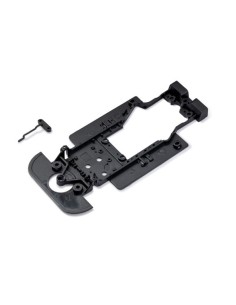
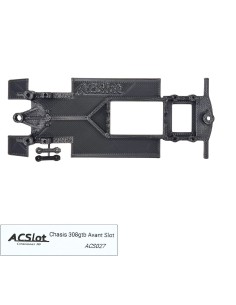
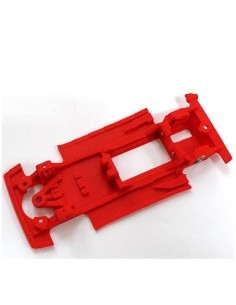
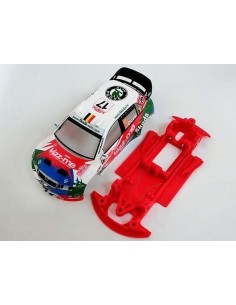
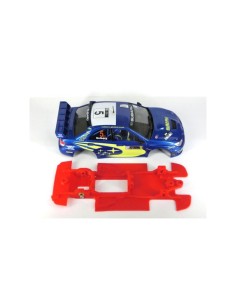
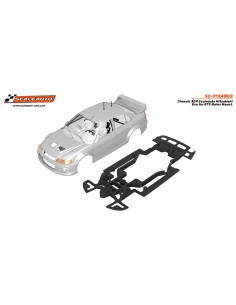
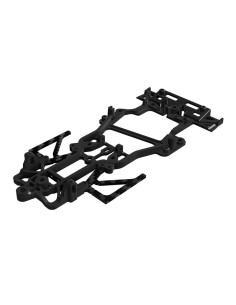
If you have been in the slot world for a while, you know that the chassis is not just another component: it is the backbone of the car. Everything that affects track behaviour —traction, cornering, acceleration response, braking stability— has its starting point in it. Changing a factory chassis for a competition-prepared one can completely transform a car that seemed to have reached its limit, and replacing a broken chassis with an original spare part brings life back to a model that would otherwise be discontinued in the drawer.
At Ministry of Hobby, you will find chassis for the most diverse uses: from direct replacements to keep your car on track, to competition parts designed to squeeze every tenth in timed runs. The offer covers different scales, motor layouts, materials, and degrees of stiffness, so that both the club circuit driver and the most demanding preparer can find what they need without having to search in four different places.
On this page, we explain what you should look for before buying a chassis, how it influences driving, what the differences are between the main types, and what mistakes to avoid. If you already know what you want, the catalogue is just a click away; if you have doubts, what follows will give you enough criteria to decide with confidence.
What is a slot chassis and why does it make a difference
The chassis is the rigid —or semi-rigid, depending on the design— structure on which the motor, front and rear axles, motor mount, guide, and body are mounted. In 1/32 and 1/24 slot cars, it coexists with a very limited interior space, making every millimetre of design count.
A well-chosen chassis serves several simultaneous functions:
- Mechanical support: keeps all components aligned under the loads generated by the motor and cornering.
- Weight distribution: the position of the motor, battery (in cars with electronics), and the chassis mass itself condition the centre of gravity and, therefore, grip.
- Controlled flex: in competition, a chassis with a certain degree of controlled flexibility absorbs track irregularities and keeps all four contact points in touch, improving traction.
- Compatibility with motor mounts: the layout of the motor housing determines whether you can use an inline, sidewinder, or anglewinder configuration, and what gear ratio is possible.
An original spare chassis restores the functionality of the factory car. A competition chassis, on the other hand, reinterprets all that geometry with more noble materials and tighter tolerances. The difference on track is noticeable from the first lap.
How to correctly choose a chassis
Before adding to your cart, there are four questions you must answer:
1. For what car and in what scale?
The chassis must physically fit with the body and the wheelbase of the model. The most common scales are 1/32 and 1/24, although there are also 1/28 formats and specific versions for Fly or NSR depending on the model. Always check the compatibility reference before purchasing.
2. What track system do you use?
Universal rail systems (Scalextric, Ninco) and sport rail systems (Scaleauto, Slot.it) have different guide widths and geometries. Although the chassis itself does not change between systems, the mounted guide and the clearance in the rail can vary. If you race on circuits with different systems, keep this in mind.
3. What motor layout do you need?
This point is critical in competition. The three main mountings are:
- Inline: the motor is positioned longitudinally, in line with the rear axle. It lowers the centre of gravity and improves stability on straights.
- Sidewinder: the motor is placed transversely, parallel to the rear axle. It allows for direct transmission and usually offers good response.
- Anglewinder: the motor is mounted at an angle to the rear axle, combining advantages of the two previous mountings and allowing the use of certain motors with the crown gear in a lower position.
Not all chassis accommodate all three mountings. Always check which motor mounts are compatible with the model you are considering.
4. What level of preparation are you looking for?
For home use or informal racing, an original spare chassis or a quality injected plastic chassis works perfectly. For federated competition or serious timed runs, it is worth considering a carbon fibre chassis or high-precision 3D printed chassis.
Main types and differences
The market offers very different chassis. Knowing the main categories helps you filter your search:
Original spare chassis (OEM)
These are the parts manufactured by the car manufacturer to replace a damaged or worn chassis. They maintain factory specifications and guarantee total compatibility with the original body. They are the most direct option when the goal is to return the car to its original state without modifications.
Competition injected plastic chassis
Made from high-strength polymers, they offer greater dimensional precision than standard chassis and usually incorporate geometries designed for competition mountings. NSR, Slot.it, and Scaleauto have notable references in this segment. They are a very balanced option in terms of performance/price.
Carbon fibre chassis
Carbon fibre offers exceptional stiffness with very low weight. Chassis made from this material are designed for high-level competition, where every gram and every tenth of a millimetre of tolerance matters. Their cost is higher, but the performance jump on track is real and measurable.
3D printed chassis
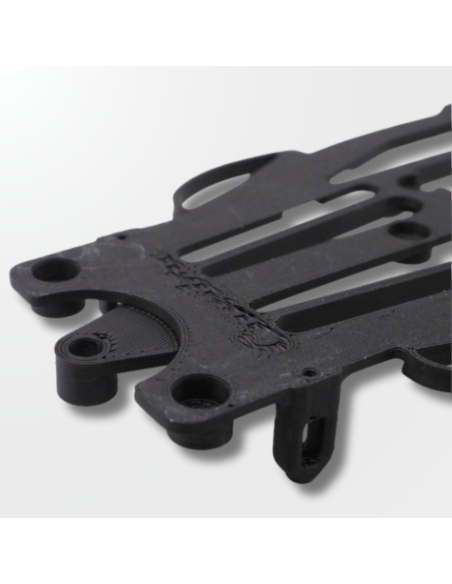
3D printing has opened up a world of possibilities for slot preparation. They allow for impossible geometries with traditional methods, fine adjustment of flex, custom positioning of motor mounts, and an adaptability that no other process offers. Some specialised manufacturers use high-precision resins to achieve finishes and tolerances comparable to industrial processes.
Chassis with controlled flex
Regardless of the material, many competition chassis incorporate intentionally designed flex zones. A completely rigid chassis may lose contact on uneven surfaces; a well-calibrated flex keeps the tyres glued to the rail and improves traction. The optimal level of flex depends on the track, surface, and driving style.
Technical aspects we should know
Beyond the material and motor mounting, there are technical details that make a difference in preparation:
Wheelbase
Each chassis has a fixed or adjustable wheelbase. It must match the body you are going to mount. A mistake here prevents correct mounting or generates tensions that affect behaviour.
Motor height and centre of gravity
In inline and anglewinder mountings, the height at which the motor sits relative to the chassis floor directly influences the centre of gravity of the assembly. The lower the motor is, the more stable the car will be in corners.
Compatibility with motor mounts
Motor mounts are the adapters that secure the motor to the chassis. There are mounts for different motor sizes (for example, 21.5 mm formats, anglewinder specific for NSR Shark motors or similar), and each chassis accommodates one or several references. Always check which mounts are compatible with the chosen chassis before buying the motor.
Track width
The rear track width (and to a lesser extent the front) affects stability in corners. Some chassis allow for adjustment through different axle positions or spacers. A wider track provides more stability but may generate more friction against the rail walls on narrow circuits.
Guide position and clearance
The chassis determines the position of the guide and how much freedom it has to move. A guide with the correct clearance follows the rail better and reduces derailments; too much clearance makes the car imprecise. Some competition chassis allow for adjustment of this parameter.
Practical tips for use, maintenance, and preparation
Having a good chassis is not enough if it is not cared for and prepared correctly. These are the points that should not be overlooked:
- Regular cleaning: dust, dirt, and excess lubricant residues accumulate on the chassis and affect performance. Periodic cleaning with the right products keeps everything in order.
- Checking flatness: a chassis that has suffered a strong impact may be slightly bent. Before blaming other components, check that the chassis rests correctly on all four points.
- Lubrication of axles: the bearings or bushings of the axles must be properly lubricated, but not excessively. An unsuitable or excessive lubricant can dirty the tyres and reduce grip.
- Checking flex: in chassis with designed flex, periodically check that the flex zone has not suffered structural fatigue or cracks. A cracked chassis can break during a race.
- Adjustment of the motor mount: if the motor shows vibration or unusual noise, check that the mount is well seated and that the pinion and crown gear have the correct mesh.
- Storage: store spare chassis in a place without humidity and away from direct sunlight, especially plastic and 3D printed ones, which can suffer deformation from heat.
Common mistakes to avoid
Both in purchasing and preparation, there are mistakes that frequently occur in the workshop:
Buying by price without checking compatibility
A cheap chassis that does not fit your body or does not accommodate the mount you need is useless. Always verify the compatibility reference before purchasing.
Confusing motor layout
Inline, sidewinder, and anglewinder are not synonyms and are not interchangeable. If you buy a chassis designed for sidewinder and try to mount a motor in inline position without the proper mount, the result will not work.
Ignoring flex
Many novice preparers believe that more stiffness is always better. On perfect surfaces, this may be true, but on circuits with irregularities, a chassis without flex may lose traction on one or two tyres constantly. Test and adjust according to the track.
Mounting the chassis with a body that does not fit
A competition chassis designed for a specific wheelbase may not fit bodies from other manufacturers even if they share scale. The exact reference of the model matters.
Not checking the gear mesh
When changing chassis, the distance between pinion and crown gear may vary. A mesh that is too tight generates heat and wear; too loose, loss of efficiency. Always adjust it with the new chassis before running.
Forcing the assembly
If a piece does not fit easily, do not force it. Check that the references match. Forcing a chassis can cause cracks that are not visible until it breaks on track.
Recommendations for beginners and advanced users
If you are starting
Start with an original spare chassis or a quality injected plastic chassis from brands like NSR or Slot.it for your usual scale. They are robust parts, well documented, and have a large community of users who can resolve doubts. It is not necessary to invest in carbon fibre until you are clear about what motor layout you use and what type of circuit you usually race on.
Learn first to assemble and disassemble the chassis calmly, to adjust the mount, and to check the gear mesh. These basic skills are worth more than the most expensive material in the catalogue.
If you already have experience
From an intermediate level, it is worth exploring carbon fibre chassis or high-precision 3D printed models for the category in which you compete. The key is to know your usual track well: its surface, its curves, and the driving style it demands.
More advanced drivers often have two or three chassis prepared differently to adapt the car to different tracks or conditions. A stiffer chassis for very smooth tracks and one with more flex for circuits with joints or irregularities. This versatility makes a difference in serious competition.
If you participate in championships with strict technical regulations, always check that the chosen chassis meets the specifications of the category before preparing it. Some categories limit the material, minimum weight, or allowed motor layout.
| Type of chassis |
Material |
Level of use |
Main advantage |
Consideration |
| Original spare (OEM) |
Factory plastic |
Domestic / Hobby |
Total compatibility guaranteed |
No performance improvements |
| Competition injected plastic |
High-strength polymer |
Club / Competition |
Good performance/price ratio |
Less adjustable flex |
| Carbon fibre |
Laminate carbon |
Advanced competition |
Maximum stiffness, minimum weight |
High price |
| 3D printing |
Resin / 3D polymer |
Custom preparation |
Custom geometries and flex |
Requires technical knowledge |
Frequently asked questions about slot chassis
Can I mount any chassis on my car?
No. Each chassis has specific dimensions for wheelbase and width that must match the body of the model. Always consult the manufacturer's compatibility table or the references indicated in the product sheet.
What is the difference between an inline chassis and a sidewinder?
In an inline chassis, the motor is placed longitudinally (in line with the rear axle), which lowers the centre of gravity. In a sidewinder chassis, the motor is in a transverse position, parallel to the rear axle. Each configuration has different advantages depending on the type of track and category.
Is chassis flex always positive?
Not necessarily. On very smooth and regular tracks, a rigid chassis may be faster. Flex is especially useful on circuits with joints, irregularities, or less perfect surfaces. The key is to adjust it according to the actual conditions of the track.
What is a motor mount and why does it matter when choosing a chassis?
The motor mount is the support that secures the motor to the chassis. It determines the exact position of the motor (height, angle) and, therefore, the possible gear ratio and centre of gravity. Not all chassis accommodate all mounts, so they must be compatible with each other.
Is a carbon fibre chassis always better?
It is better in demanding competition contexts where weight and stiffness make a difference. For home use or informal racing, a good injected plastic chassis offers more than enough performance at a much lower cost.
Can I repair a broken chassis or is it better to replace it?
In general, if the break affects a structural area (mounting area, axle housing, guide area), it is most advisable to replace it. Repairs with glue in load areas usually do not withstand the tension on track and may fail at the least opportune moment.
Are 3D printed chassis reliable for competition?
It depends on the technology and materials used. Chassis printed in high-precision resins by specialised manufacturers offer very good quality and consistency. Those printed with domestic FDM may have dimensional variations that affect performance.
What should I check when receiving a new chassis before mounting it?
Check that there are no burrs or deformations, that the axle housings are perfectly aligned, that the guide area is clear, and that the mount fits without excessive clearance. A five-minute check can prevent problems on track.
Does the chassis affect the motor's electrical consumption?
Indirectly, yes. A misaligned chassis that generates friction in the axles or transmission makes the motor work harder to maintain speed, which increases consumption and temperature. A clean and well-adjusted assembly improves the efficiency of the whole.
Can I use the same chassis for different rail systems?
The chassis itself is usually compatible, but the mounted guide may vary between systems (universal rail from Scalextric/Ninco versus sport rail from Scaleauto/Slot.it). Make sure you have the correct guide for the system you are going to race on.
What brands do you usually work with in this segment?
At Ministry of Hobby, we have references from NSR, Slot.it, Avant Slot, and Scaleauto, among others. They are the reference brands for spare parts and preparation, with extensive and well-documented catalogs for the most common models in competition.
How does the weight of the chassis affect the car's behaviour?
A lighter chassis reduces the total weight of the car and can improve acceleration and response. However, in some categories, there is a minimum regulatory weight, so lowering the weight too much forces you to add ballast in strategic positions. Balancing weight and centre of gravity position is part of the preparation work.