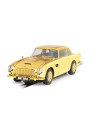
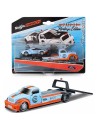
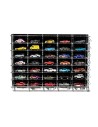
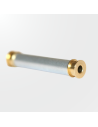
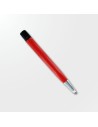
There is a part of the hobby that is not seen on the track or in the display case, but it determines everything: the work done at the bench. A well-prepared slot car not only runs faster; it lasts longer, fails less, and conveys a sense of control that makes a difference in every corner. And a well-preserved collectible maintains its value for decades. All of this starts here, in the workshop.
In this section, you will find the products that we use ourselves and recommend with knowledge: specific lubricants for each point of the drivetrain, precision tools for delicate interventions, storage systems that protect what you value most, and consumables that make the difference between a car that simply works and one that is truly ready.
It doesn't matter if you are preparing a car for the next championship, doing seasonal maintenance on your fleet of NSR or Slot.it, or simply wanting to have your workspace organized once and for all. Here you will find what you need, explained with the depth it deserves.
Why the workshop is the foundation for any serious enthusiast
The performance of a slot car does not depend solely on the motor or the tyres you mount: it depends on how well the assembly is adjusted, lubricated, and maintained. An axle with excessive friction can cost you tenths per lap. A dirty guide transmits current poorly and causes inexplicable cuts. An unlubricated gear wears out sooner than expected and drags the pinion and crown gear with it.
The good news is that most of these problems have simple solutions if you have the right tools and know when and how to apply them. Preventive maintenance in slot racing is much more effective than corrective: spending ten minutes checking a car after each session considerably extends the lifespan of its components and saves you unpleasant surprises in the middle of a race.
The same applies to static modelling, figures, and dioramas: good organization of the workspace, well-maintained brushes, and properly stored materials are the difference between enjoying the process and struggling with it.
How to choose the right workshop products
Not all lubricants are suitable for everything. It is one of the most common mistakes among beginners: buying a generic oil or using what they have on hand. Products specific to slot and modelling are formulated to work within very tight tolerances, with delicate materials (plastics, brass, nylon) and at the temperatures generated in a running slot motor.
When choosing, it is advisable to consider:
- The application point: lubricating a ball bearing is not the same as lubricating a gear or a plastic axle. Each area requires a different viscosity and formulation.
- The frequency of use: a competition car needs more frequent checks than a collectible car that is used occasionally.
- The brand and system: some manufacturers like NSR, Slot.it, or Scaleauto have specific recommendations for their components. Following them is always a good idea.
- The tool for each task: a cheap pinion puller can damage the axle or the gear. Investing in quality tools pays off in the medium term.
Types of products and their main differences
Lubricants
They are the heart of maintenance in slot racing. There are basically three categories:
- Low viscosity oils: ideal for ball bearings and axles. They penetrate well, reduce friction to a minimum, and leave no residues that attract dust. They are applied in minimal amounts.
- Greases for gears: denser, designed for the pinion-crown gear transmission. They withstand mechanical loads better and do not shift with centrifugal force.
- Products for braids and guides: some enthusiasts use specific products to improve electrical conductivity and reduce braid wear.
Precision tools
The workshop bench of a slot car enthusiast or modeler in general needs a basic set of tools that goes beyond a screwdriver:
- Precision screwdrivers (flat and Phillips, in various sizes).
- Motor wrenches and specific adjustment tools for slot racing.
- Pinion pullers: essential to avoid damaging the axle when disassembling the transmission.
- Adjustment gauges: to check guide height, motor lateral play, or chassis tolerances.
- Fine-tipped pliers, tweezers, and holding tools for working with small parts.
- Cutting and sanding tools for preparation and customization work.
Storage and organization
A well-stored collection is a well-preserved collection. Dust, humidity, and impacts are the three main enemies of both slot cars and collectible miniatures. The available solutions cover different needs:
- Car cases: protect models during transport and storage, with padded compartments that prevent rubbing and impacts.
- Organizer boxes: for sorting spare parts, tyres, wheels, braids, guides, and any small component. Having everything located saves time and prevents losing parts.
- Solutions for controllers and electronics: cases and holders that protect controllers and keep wiring organized.
Technical aspects worth knowing
Understanding at least how a slot car works helps to know where to intervene and why. The drivetrain of a typical slot car includes the motor, pinion, crown gear, rear axle, bearings, and wheels. Each connection point between components is susceptible to generating friction, and that friction translates into speed loss and premature wear.
The type of motor mounting also influences maintenance needs. In a sidewinder configuration (motor parallel to the rear axle), the transmission is direct and any misalignment between pinion and crown gear is immediately noticeable. In an inline configuration (motor perpendicular to the axle, in line with the car), the transmission angle is different and the tension points change. The anglewinder configuration combines features of both and requires special attention to angle adjustment.
The braids deserve a separate mention. They are the only electrical contact point between the circuit and the car, and their condition directly influences current continuity. Dirty, deformed, or worn braids cause current cuts that can easily be mistaken for motor or circuit problems. Regularly inspecting and cleaning them is one of the simplest and most effective maintenance gestures.
Practical maintenance tips
With years of experience in the hobby and in preparing competition cars, these are the habits that make a difference:
- Clean before lubricating: applying lubricant over dirt or old grease not only does not help but can make things worse. Use an appropriate cleaner, let it dry, and then lubricate.
- Less is more with lubricants: a drop is sufficient for most applications. Excess attracts dust and can contaminate the track or the braids.
- Establish a review routine: after each session, spend a few minutes inspecting the overall condition of the car: guide, braids, tyres, and transmission. Small problems detected in time do not turn into breakdowns.
- Store cars properly: if you are not going to use a model for a while, store it in an appropriate box or case, away from dust and direct light. Rubber tyres can deteriorate if left resting under the weight of the car for months.
- Organize your spares: having tyres sorted by size, pinions by tooth count, and guides by rail system saves you time and frustration. An organizer box with compartments is a small investment with a huge return.
Common mistakes to avoid
Even among experienced enthusiasts, there are mistakes that are repeated with some frequency:
- Using non-specific lubricants: WD-40, for example, is not a long-term lubricant. It displaces moisture and cleans, but does not provide lasting protection and can damage certain plastics.
- Over-lubricating bearings: excess oil splashes, contaminates the track, and can reach the braids, reducing electrical conductivity.
- Forcing parts when disassembling: axles, pinions, and crown gears have very tight tolerances. Trying to extract them without the right tools can bend the axle or irreparably damage the pinion.
- Neglecting the guide: the guide is the first contact point with the rail. A worn or poorly adjusted guide causes derailments, current loss, and erratic behaviour that is mistakenly attributed to the motor or chassis.
- Mixing parts from different systems: not all components are interchangeable between brands. Scalextric, Scaleauto, Ninco, and Carrera have their own geometries and tolerances. Research before mixing parts from different systems.
- Storing without protection: storing cars or miniatures without a box, exposed to dust and light, deteriorates both the finish and the mechanical components in the long term.
Recommendations based on the enthusiast's profile
If you are starting out
You do not need to equip a professional workshop from day one. With a basic kit, you already cover 80% of the usual needs:
- A specific oil for bearings and axles.
- A grease for gears.
- A set of precision screwdrivers.
- An organizer box to store spare parts.
As you progress and understand better how your car works, you will incorporate more specific tools. Do not overwhelm yourself at the beginning.
If you already have experience and compete
In competition, the margins are small and maintenance becomes part of the strategy. Here it makes sense to invest in:
- Gauges and precision tools to check height adjustments, lateral play, and transmission alignment.
- High-end lubricants formulated for competition performance.
- Brand-specific pullers and tools for quick interventions between heats.
- Storage systems that allow you to transport the car, spares, and tools in an organized manner.
If you are a collector
The focus shifts to preservation. The most important products for you are cleaning and protection products, along with storage solutions that keep your models in perfect condition for years. Organizing the space also becomes particularly relevant as the collection grows.
| Type of product |
Main use |
Recommended profile |
Frequency of use |
| Bearing oil |
Reduce friction in axles and bearings |
All |
Every 3-5 sessions |
| Gear grease |
Lubricate pinion and crown gear |
All |
Every season or assembly |
| Contact cleaner |
Braids, guide, and electrical circuit |
Competition and frequent use |
Monthly or before competing |
| Precision tools |
Disassembly and adjustment |
All |
As needed |
| Pinion puller |
Disassemble transmission without damage |
Preparers and competition |
As needed |
| Transport case |
Protect cars during transport |
Competition and collectors |
Continuous |
| Organizer boxes |
Sort spare parts and pieces |
All |
Continuous |
Frequently asked questions about the slot and modelling workshop
How often should a slot car be lubricated?
It depends on usage. A competition car that runs several hours a week needs checking every 3 to 5 sessions. An occasionally used car may be fine with a check at the start of each season. The key is not to wait for signs of wear to appear.
Can I use cooking oil or WD-40 for lubrication?
It is not recommended. Cooking oil can oxidize metals and deteriorate plastics. WD-40 is a degreaser and moisture displacer, not a long-lasting lubricant. Always use products specifically formulated for slot or modelling.
How much oil should be applied to the bearings?
A very small drop, applied directly to the bearing, is sufficient. Excess lubricant is counterproductive: it attracts dust, can contaminate the track, and reach the braids, reducing conductivity.
Why does my car cut out even though the circuit is fine?
The most common issue is that the problem lies in the braids or the guide. Inspect the condition of the braids (if they are bent, worn, or dirty), check that the guide has enough play, and verify the contact pressure. A contact cleaner can resolve the issue in many cases.
What tool is essential to start?
A good quality set of precision screwdrivers is the most versatile and commonly used tool. From there, incorporate a pinion puller if you are going to disassemble the transmission with some frequency.
How should I store cars that I won't use for months?
In a padded box or case, in a dry place and away from direct light. If they are cars with rubber tyres, avoid leaving them resting on the wheels under the weight of the car: they can deform. Remove the braids if you are going to store them for a long time to avoid pressure marks.
Do the same tools work for NSR, Slot.it, and Avant Slot?
Generally, yes, although each brand has its peculiarities. Some adjustment tools are specific to a brand or a particular motorization system. Check the manual for each model to know if you need specific tools.
What is an adjustment gauge and what is it for?
It is a measuring tool that allows you to verify tolerances and adjustments with precision: guide height, motor lateral play, distance between pinion and crown gear, etc. In competition, having the car adjusted within the correct tolerances can make a noticeable difference in track performance.
How do I organize spare parts to avoid losing them?
An organizer box with compartments is the most practical solution. Sort by type of part (tyres, wheels, pinions, guides, braids) and, within each type, by size or specification. Label the compartments and you will find what you are looking for in seconds.
Do workshop products for slot also work for static modelling?
Some do, such as organizer boxes, precision tools, or storage systems. Specific slot lubricants are less relevant for static modelling, but cleaning and preservation products can be useful in both contexts.
How often should I check the braids?
Visually, at each session. Braids wear out with use and can bend if the car derails. A couple of minutes of inspection before starting to run can save you problems during the session.
Is it worth investing in quality tools or are basic ones sufficient?
Quality tools are particularly noticeable in delicate interventions: a well-built pinion puller prevents damage to the axle that is then difficult to repair. For occasional use, a basic kit with good value for money is more than sufficient. For those who regularly prepare cars or compete, investing in specific tools pays off quickly.